Firefighter Written Test Complete Prep Course [2026]
The firefighter written exam is a standardized cognitive test used by fire departments across the US and Canada to screen and rank candidates before physical testing and interviews. It consists of aptitude-based questions covering areas such as math, reading comprehension, mechanical reasoning, and situational judgment - not technical firefighting knowledge. Your score determines your position on the hiring list, making preparation essential to placing high enough to be called.
If you have applied to a fire department and received an invitation to sit a written exam without being told the name of the test or vendor, you are in the right place.
This prep course is built to cover every cognitive skill area tested across all major firefighter written exam formats, giving you complete preparation regardless of which specific test your department uses.
*If you already know the name or vendor of your test, we strongly recommend visiting our Firefighter Exam Portal to find the prep pack built specifically for your exam.
1-Month Complete Access
Each practice test question contains detailed answers and explanations

The firefighter written exam is a standardized aptitude test administered by fire departments and civil service commissions across the US and Canada as part of the entry-level hiring process. It is designed to measure the cognitive skills required to perform effectively as a firefighter - not your knowledge of firefighting techniques or procedures.
Most firefighter written exams test candidates across the same core skill areas: reading comprehension, numerical reasoning, mechanical reasoning, spatial orientation, situational judgment, memory, and grammar. The format is typically multiple choice, with 80-150 questions completed within 2 to 2.5 hours.
Your written exam score does more than determine a pass or fail - it ranks you against every other candidate in that hiring cycle. Departments work down the list from the highest score, so the higher you place, the better your chances of receiving a job offer.

Using our Firefighter Written Exam PrepPack, you get:

We've created a comprehensive Firefighter written test prep course designed to help you succeed. Our course closely mimics the actual test conditions and platform, allowing you to identify and improve your weaker areas. With this focused preparation, you'll be confident and ready to excel on test day.
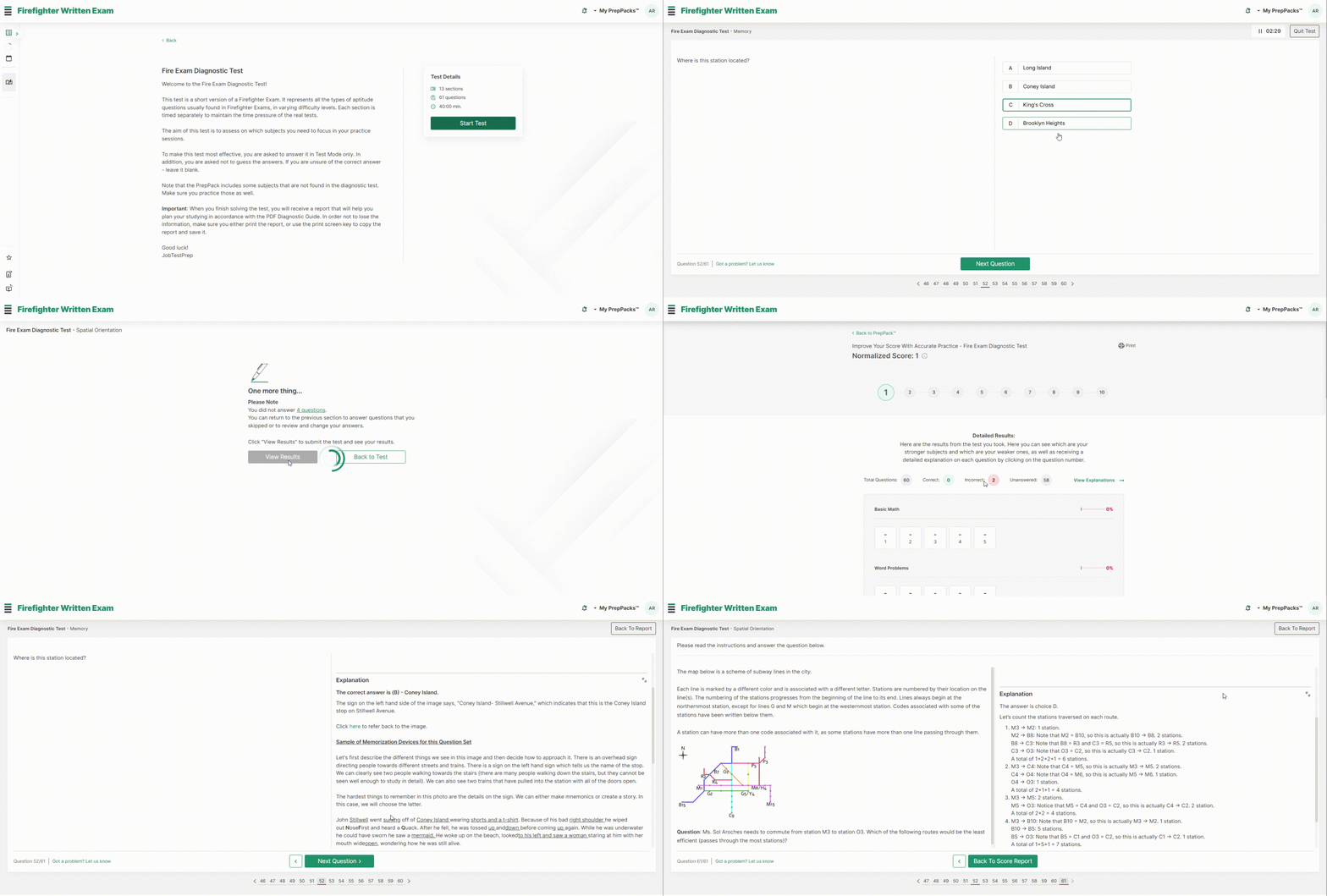
JobTestPrep's firefighter written test prep has recently been upgraded based on expert research and user feedback in order to ensure that you receive the highest quality practice available. You can rely on our experience and expertise to provide you with the tools you need to get the high score you need.

At JobTestPrep, we've helped thousands of candidates pass competitive hiring assessments since 1992. Our materials are designed by psychometric experts and updated based on real candidate feedback to reflect the latest test formats.

Study the following image for five minutes. You may not take notes. After five minutes try answering the question below which relates to this image.
How many people are wearing gloves?
Read the scenario and then answer which statement you feel is MOST APPROPRIATE and which answer you feel is LEAST APPROPRIATE
You are a firefighter on a busy overnight shift. During a routine equipment check at the start of your shift, you notice that one of the breathing apparatus units has a cracked seal. The unit has already been signed off as operational by the previous crew. Your captain is currently in a briefing with senior officers from another district and has asked not to be disturbed unless there is an active emergency.
A. Sign the equipment log yourself confirming the unit is operational and flag it for repair at the next scheduled maintenance check.
B. Remove the unit from service immediately, document the fault clearly in the equipment log, and inform your captain of the issue as soon as the briefing concludes.
C. Alert a senior colleague on your crew and ask them to make the decision about whether to remove the unit from service
D. Swap the faulty unit out for a functional one from another equipment pack, sign it off as operational, and assume that whoever checks the other pack will pick up and report the damaged unit themselves.
The PrepPack provides thorough, well-rounded preparation covering every cognitive skill area tested in firefighter written exams across the US and Canada. Here is how it helps:
The more prepared you are, the higher you score - and the higher you score, the better your position on the hiring list.
The firefighter written exam tests cognitive aptitude, not firefighting knowledge. Most formats include reading comprehension, numerical reasoning, mechanical reasoning, spatial orientation, situational judgment, and memory. The exact sections vary by department and vendor, but these core skill areas appear consistently across all major formats used by fire departments in the US and Canada.
The difficulty varies by department, but the exam is designed to rank candidates against each other - not simply to pass or fail them. Departments hire from the top of the score list, so performing above the minimum passing threshold of 70% is essential. Candidates who prepare with realistic, timed practice tests consistently outperform those who do not.
The minimum passing score at most departments is 70%. However, passing is not the same as being hired - your score determines your rank on the hiring list. At competitive departments, candidates scoring close to the minimum are rarely called. Aiming for 80%+ gives you a meaningful advantage over other applicants.
8 to 12 weeks of structured preparation produces the strongest results. Start with a diagnostic test to identify your weak areas, then focus your practice time accordingly. If your test date is sooner, prioritize the skill areas you find most challenging and practice under timed conditions from day one.
Retake policies vary significantly. Some testing platforms such as FCTC allow candidates to retest after 30 days, while others tie retake eligibility to the department's next hiring cycle, which can be months or years away. At major city departments, open competitive exams may only be held every 4 to 7 years. Thorough preparation before your first attempt is always the safest approach.
Fire departments test cognitive aptitude rather than firefighting knowledge because technical skills are taught at the academy - the ability to reason quickly and accurately under pressure is not. The connection to the job is direct: reading comprehension reflects following orders in the field, numerical reasoning maps to calculating water pressure and flow rates, mechanical reasoning reflects operating equipment, and spatial orientation reflects navigating buildings in zero-visibility conditions. Departments also use standardized cognitive tests to rank a large applicant pool fairly and consistently.
A career in firefighting offers strong long-term rewards. Entry-level firefighters in the US earn between $50,000 and $80,000 annually, with salaries at major departments such as FDNY and LAFD exceeding $100,000 with overtime. Beyond salary, firefighters receive exceptional benefits including a defined pension, full medical coverage, and job security as a public sector employee.
The written exam is the first and most decisive filter in the hiring process. Departments rank all passing candidates by score and hire from the top down - a higher score means a better position on the list and a significantly greater chance of receiving a job offer. At competitive departments, the difference between being hired and waiting years for the next exam cycle can come down to a few points on the written test.
Fire departments across North America use a range of standardized exams administered by third-party testing vendors. The most widely used are:
If your department uses one of these vendors, we have a dedicated prep pack built specifically for that exam. Visit our Firefighter Exam Portal to find it.
After completing your payment, you will receive two emails: a payment receipt and a login link with your account details. Once you log in and reset your password, you will have instant, unlimited access to your PrepPack.