


Raven's Progressive Matrices Test Practice Guide [2026]
 Raven's Progressive Matrices Test Practice Guide [2026]
Updated: October, 2026 | Trusted by over 1,600 Candidates

The Raven's Progressive Matrices (RPM) Test is a high-level, non-verbal assessment used to estimate fluid intelligence (often referred to as the Raven's IQ Test).
On this page, you can test yourself with a free Raven's Progressive Matrices practice test, including sample questions and detailed answers for both the Standard (SPM) and Advanced (APM) versions. We’ll focus on the Standard and Advanced tests, with a special emphasis on APM. Let’s get started!
This page gives you a free Raven’s Progressive Matrices practice test: an interactive sample test, four sample questions and a bonus question, each with a detailed answer that explains the rule behind the correct choice. Expert tips show you how to crack each question type, and the sections that follow cover the test versions, key facts, scoring and how to prepare for the full test.
Start practicing with our Free Raven's Matrices Test now, which includes questions of varying difficulty levels for both APM and SPM tests. Alternatively, continue reading below for additional insights into the test.

What is the Raven's Matrices Test?
The Raven's Matrices Test (also known as the Raven's Progressive Matrices Test) is a renowned non-verbal assessment tool designed to evaluate abstract reasoning and fluid intelligence. This popular test is highly regarded for its ability to measure intellectual capacity and cognitive abilities without cultural bias.
The test measures unique cognitive abilities – mostly logic, pattern recognition, and induction. The questions include different complete patterns figures in matrices – with multiple answering options. The test consists of a series of increasingly complex visual geometric designs, where test-takers must identify the missing element to complete the patterns.
Note: It is crucial to review many examples of different figures and recognize a variety of common patterns (such as clockwise movement, changing of shapes, and increasing/decreasing numbers).
Raven's Matrices Test Quick Facts
| Fact | Detail |
|---|---|
| Also known as | Raven’s Matrices, Raven test, RPM, Raven’s IQ test |
| What it measures | Abstract reasoning and fluid intelligence: spotting patterns, thinking clearly and solving unfamiliar problems without relying on language or prior knowledge |
| Test type | Non-verbal, multiple choice, with questions in order of increasing difficulty |
| Question format | A matrix of shapes with one piece missing, usually in a 2x2 or 3x3 grid; you choose the piece that completes the pattern |
| Versions | Standard (SPM), Advanced (APM) and Colored (CPM); a newer edition, Raven’s 2, was published in 2018 |
| Employer version (APM-III) | 23 questions in up to 40 minutes, preceded by 4 practice questions, taken online and often unsupervised |
| Answer options (APM-III) | Eight per question |
| Scoring | Each answer is scored for correctness, item difficulty and item discrimination; the result is a theta score converted to a percentile against a norm group |
| Who takes it | Candidates for graduate, supervisory, managerial, technical and executive roles (APM) and for entry-level and non-managerial roles (SPM); also used in clinical, educational and research settings |
| Created by | John C. Raven, with Lionel Penrose, in 1936; first published in 1938 |
| Published by | Pearson; employer testing runs through Pearson TalentLens, and Hogan Assessments offers APM-III under license |
| Can you prepare? | Yes. Practicing the common rule types under the time limit makes the format familiar, and this page offers free practice |
Free Raven's Progressive Matrices Practice Test
On the section below you will find free Raven’s Progressive Matrices practice questions that resemble the real RPM exam, so you can understand how the Raven’s matrices test works. The four sample questions below are free Raven’s matrix test examples with detailed answers, in the format of the Raven’s IQ test, covering the Standard (SPM) and Advanced (APM) versions.
Each practice question shows a matrix of shapes that follows a specific pattern or rule. Your task is to figure out the rule and choose the piece that completes the matrix, then check your reasoning against the answer and expert tip that follow every question.
Sample Question Example
Let's start with a simple, 2x2 matrix of shapes that follows an easy-to-spot pattern.
Carefully examine the progressive matrix and determine the correct pattern.

Choose the correct answer:

The correct answer is:

Note that the patterns are diagonally mirrored from one box to its diagonal counterpart. The first image in the bottom row is the result of mirroring the first image in the top row over the x-axis. Thus, the second image in the bottom row must be the result of mirroring the second image in the top row over the x-axis.
Raven's Practice Questions
Raven's Matrices Sample Question 1
In the following question, you do not have detailed matrices to focus on; rather, you need cognitive ability to identify the correct pattern that completes the figure.
Observe the image carefully and choose the answer that continues the pattern.
Choose the correct answer:
Wrong
Wrong
Correct!
Wrong
Wrong
Wrong
The correct answer is:
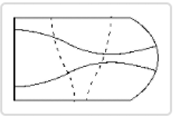
To solve this kind of question, you need to identify the patterns in the given background to identify the pattern in the missing piece.
The background usually contains different kinds of lines or repeating shapes. These lines and shapes could be different in many ways, for example:
- Orientation – Horizontal, vertical, straight, curved, diagonal, crisscross, etc.
- Style – Lines and shapes could change in their thickness, be solid, or dashed.
- Direction – Lines could go inward, outward, straight, or change through the pattern.
- Frequency – Lines or shapes could split or be expanded into multiple figures.
- Space – The spaces between figures could be parallel or change through the pattern.
In the question above, you can identify curvy lines from two styles – solid and dashed. They have several shifts in their direction through the pattern. However, they are always parallel to each other.
Raven's Matrices Sample Question 2
In the following Raven's Progressive Matrices problem, you have a 3x3 matrix of shapes that follow a specific pattern or rule.
Observe the following progressive matrix and identify the pattern.
Choose the correct answer:
Wrong
Wrong
Wrong
Wrong
Correct!
The correct answer is:

The second image in the first two rows is the result of removing a small square from the bottom rectangle in the first image and the third image is the result of removing another small square from the bottom rectangle in the second image. Thus, the third image in the bottom row must be the result of removing a small rectangle from the bottom line of the second image.
Want every question explained like this, at your level?
The Raven’s Matrices Adaptive PrepPack™ has over 700 practice questions that adjust to your answers.
Raven's Matrices Sample Question 3
Observe the 3x3 matrix and identify the missing pattern
Choose the correct answer:
Wrong
Correct!
Wrong
Wrong
Wrong
Wrong
The correct answer is:
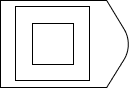
The third image in each of the first two rows is created by identifying the differences between the first two images in that row. Identical parts of the first two images are removed, while the parts that differ are combined to form the third image.
Raven's Matrices Sample Question 4
In the following Raven's Progressive Matrix, you should identify the patterns of shapes and figures across rows and columns.
Analyze the common figures and determine the correct pattern, and choose the correct answer.
Wrong
Wrong
Wrong
Correct!
Wrong
Wrong
Wrong
The correct answer is:
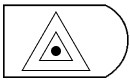
In each line of pictures, the second one is made by pushing the three parts from the first one closer. And the third picture in the first two lines shows those parts stacked inside each other.
Therefore, for the last picture on the bottom line, you should stack the three parts from the first picture inside each other.
Questions get harder as you progress
In the Raven’s Matrices Adaptive PrepPack™, difficulty rises as you answer correctly. When you miss a question, you get a detailed explanation and retry it on the spot.
Raven's Matrices Sample Question 5
Carefully examine the diverse shapes within the boxes and determine the correct pattern.
Choose the correct answer
Wrong
Correct!
Wrong
Wrong
Wrong
Wrong
Wrong
Wrong
The correct answer is:
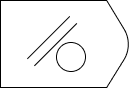
This matrix follows four patterns:
- Each row contains one square, one pentagon, and one circle.
- Each shape appears once in a big size, once in a medium size, and once in a small size throughout the matrix.
- In the top row, all lines are vertical. In the middle row, all lines are horizontal. In the bottom row, all lines are diagonal.
- The length of the lines varies according to the shape: the longest lines are near the square, the medium-length lines are near the circle, and the shortest lines are near the pentagon.
The shape missing from the matrix is a medium-sized circle. In the third row, the lines are diagonal, and consistently, the shape appears beneath these lines on the right side. Therefore, the missing image must include a medium-sized circle positioned under the diagonal, medium-length lines to the right.
Practice for the Raven's Progressive Matrices Test
Now that you know about the different kinds of Raven's Matrix questions and how to tackle them, it's time to put that knowledge into practice.
To ensure you get an excellent score on your assessment, we've redesigned our Raven's Matrices Adaptive PrepPack™ so it no only simulates the actual test, it also adjusts to you as you go.
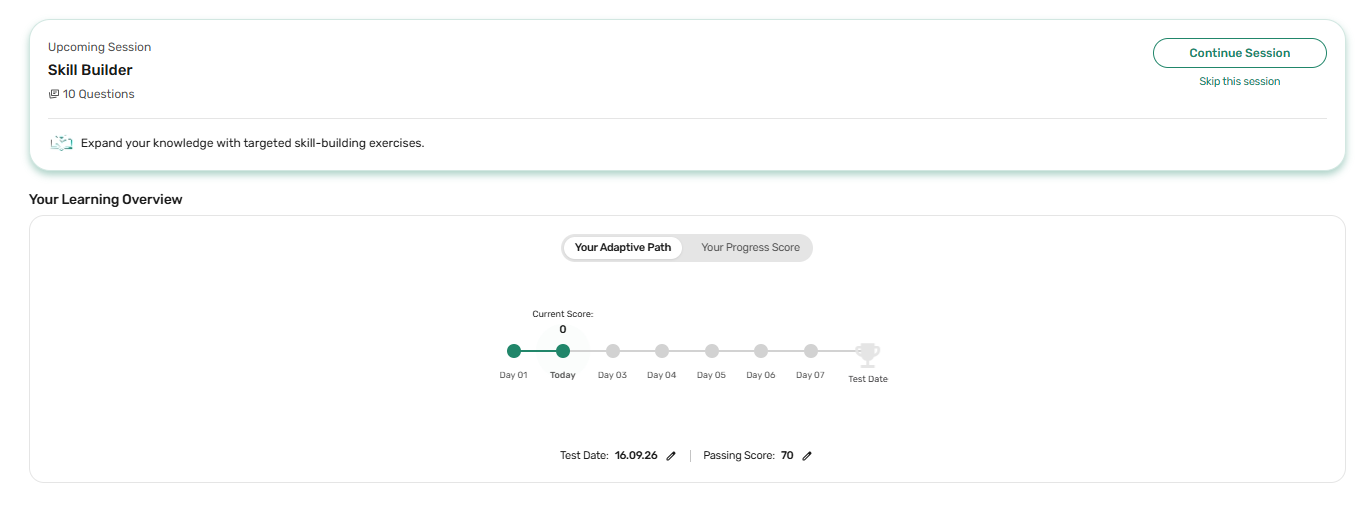
Sessions raise the difficulty as you answer correctly, and switch to in-depth explanations the moment a knowledge gap appears. Once you reach mastery in a topic, your study plan moves on, so you're never stuck repeating what you already know or rushed past what you haven't.
Every simulation comes with a detailed score report, including your Progress Score and your Relative Score, like the example below:
Are you looking for additional assessments? Have a look at out our Cognitive Ability Test, Matrigma Test, Wonderlic Practice Test or our Pre-Employment Personality Tests.
Raven’s Question Types and How to Solve Them
Raven’s questions repeat a limited set of rules. Recognizing which rule is at work tells you what to look for in every row and column, so you can predict the missing piece before you read the answer options. The seven rule types below cover the questions you will meet in the Standard and Advanced tests.
Progression: One feature changes by a fixed step along a row or column
Motion: Objects change position with each step
Rotation and reflection: Shapes turn by a fixed angle or flip over an axis
Construction: Two cells combine to form the third
Elimination: Features shared by two cells disappear; features found in only one carry over
Dual rule: Two features follow two independent rules at once
Distribution of values: The same set of values appears once in every row and column
Types of Raven's Progressive Matrices Tests:
- Raven's Standard Progressive Matrices (SPM): This version of the Raven test consists of items that become increasingly difficult. It is designed to measure above-average intelligence and is often used for educational and occupational assessments.
- Raven's Advanced Progressive Matrices (APM): The advanced form of the Raven's test, APM is geared towards assessing higher levels of fluid intelligence. It is used for individuals with above-average cognitive abilities, featuring more complex patterns and a higher item difficulty.
- Raven's Colored Progressive Matrices (CPM): Designed for younger children and the elderly, the CPM test uses visually stimulating, colored backgrounds to make the assessment more engaging. This form is particularly effective in minimizing cultural bias and is often used in diverse settings.
💡Useful Tips for Solving Raven's Matrices:
-
Speed and Accuracy: Quickly and correctly recognize patterns, focusing on spatial reasoning and progressive matrices.
-
Time Management: Keep track of time constraints.
-
Complexity Awareness: Anticipate an increase in question complexity as you progress.
-
Pattern Recognition: Master the identification of recurring patterns, crucial for these tasks.
-
Shape Familiarity: Become comfortable with various shapes, such as circles, triangles, and rectangles.
-
Rotation Direction: Note rotational movements, which can be clockwise or counter-clockwise.
-
Line Orientation: Observe line placement and direction within the shapes.
-
Color Shifts: Watch for color changes, especially in common colors like black and white.
-
Row and Column Patterns: Identify consistent patterns across rows and distinct patterns down columns.
Pass the Raven's Matrices Test
If you practice Raven's Matrices questions again and again, especially under time-pressure, you'll get better and your scores will go up, a lot. It's tough to get a high score if you don't know all the tricks and don't practice sufficiently for it!
Our comprehensive Raven's Matrices Adaptive PrepPack™ includes:
- Personalized learning plan based on your test date
- Partial Raven's Matrices simulations to assess your level
- Very detailed insights on strengths and gaps you can actually learn from
- Full simulations close to the test date
- Dedicated learning hub with video tutorials
- Adaptive learning sessions that adjust to your level
Raven’s Score Explained
Your Raven’s result is usually reported as a percentile, which compares you with a group of previous test-takers, rather than as a number of correct answers out of 23. This section explains how a score is built and how to read it.
How the APM-III is scored
On the online Advanced test (APM-III), each answer is scored against three parameters: whether it is right or wrong, how difficult the question is, and how well it separates stronger from weaker test-takers. Correct answers to harder, more discriminating questions raise your score more than correct answers to easy ones, so two candidates with the same number of correct answers can end up with different scores. These parameters produce a theta score, an ability estimate that runs from -4.000 (very low ability) to +4.000 (very high ability). Fixed-form tests such as the APM-II score each answer as right or wrong and base their norms on the number of correct answers.
From theta score to percentile
Theta scores are difficult to interpret, so they are converted into a percentile. A percentile compares your score with a norm group, a set of previous test-takers such as managers. A percentile of 67 means your score was higher than or equal to the scores of 67% of that group, and the same performance can give a different percentile against a different norm group. The highest percentile you can reach is 99.
Pearson’s sample APM-III report shows how the scores appear together:
| Report element | Sample result | What it tells you |
| Answered correctly | 11 of 23 | The raw count of right answers |
| Norm group | Managers | The group your result is compared with |
| Percentile | 67 | Your score was higher than or equal to 67% of the norm group |
| T-Score | 54 | A standardized score with a mean of 50 and a standard deviation of 10 |
| Stanine | 6 | A score on a 9-point scale, with a mean of 5 and a standard deviation of 2 |
| Sten | 6 | A score on a 10-point scale, with a mean of 5.5 and a standard deviation of 2 |
What counts as a good score?
There is no universal pass mark. Employers choose their own cut-off for a role, and Pearson advises them to validate the test and set cut scores from their own data. A good score is therefore one that meets the requirement for the role you are applying for. Pearson’s sample report notes that two people with the same raw score can have different theta and percentile scores, so the raw count alone does not decide the result.
Understanding how Raven’s scoring works is only half of the picture. Because the real result is a percentile that compares you with other test-takers, the number of questions you answer correctly in practice does not show whether you are competitive.
The Raven’s Matrices Adaptive PrepPack™ gives you a score compared with other candidates preparing for the same test. After every session, your Relative Score shows how you rank against them, next to your Progress Score, which tracks your right and wrong answers. That lets you see where you stand instead of guessing.
FAQs
The Raven’s test measures fluid intelligence, which includes abstract reasoning, cognitive thinking, problem-solving, and pattern recognition skills. It is widely used to assess intellectual capacity without the influence of language skills.
The advanced progressive matrices include more complex patterns and higher item difficulty levels. These questions require advanced problem-solving abilities and are designed for individuals with above-average intelligence.
The online APM-III has 23 questions, preceded by 4 practice questions, and allows up to 40 minutes. The classic Advanced booklet is longer, with 48 items in two sets: Set I has 12 items and Set II has 36. Employers choose which format to use, so check your test invitation for the exact version.
The Colored (CPM), Standard (SPM) and Advanced (APM) versions differ in difficulty and audience. The CPM is the easiest and suits children aged 5 to 11, older adults and people with impairments. The SPM suits the general population, and the APM is the hardest, designed for adults and adolescents of above-average ability. The table above compares them in detail.
There is no universal pass mark. Results are usually reported as a percentile against a norm group, such as managers, and employers set their own cut-off for each role. A percentile of 67 means your score was equal to or higher than 67% of that group. Practicing the question rules under timed conditions helps you improve your result.
The Raven’s test is often called the Raven’s IQ test because it estimates fluid intelligence, the ability to solve new problems. It does not cover all of intelligence: it is a non-verbal estimate of abstract reasoning, and Pearson recommends combining it with other assessment data in hiring. Pearson also states that it should not be the sole basis for an employment decision.
As a non-verbal test tool, the Raven's Progressive Matrices Test relies on visual geometric designs rather than language-based questions, making it less susceptible to cultural and linguistic biases.
Yes, practice can improve your performance. By getting familiar with the test format and the common rules, and by practicing under time pressure, you can work faster and score higher on this type of test.
Pearson recommends completing the online APM-III on a computer, laptop or tablet with a dependable internet connection and an easy-to-view screen. Mobile phones with small screens are not recommended. Check your invitation for any instructions from the employer, and test your device and connection before the day.


