


Firefighter Aptitude Test Practice for Australia’s Fire Services
 Firefighter Aptitude Test Practice for Australia’s Fire Services


Updated: October, 2026
Before you can begin training as a firefighter in Australia, you need to pass a firefighter aptitude test, also known as the firefighter written exam, aptitude exam, entry exam, or pre-employment exam. According to AFAC (the Australasian Fire and Emergency Service Authorities Council), the national peak body for the sector, Australia's fire and emergency services are organised individually by each state and territory rather than through one combined national fire brigade, which is why the exact test you'll sit, and who administers it, depends entirely on where you're applying. While the exact format varies by state, most firefighter aptitude tests cover a similar core: numerical reasoning, reading comprehension, mechanical reasoning, and abstract or spatial reasoning.
On this page, you'll find free sample questions for every state and territory's firefighter exam. Each set of questions mirrors the structure and difficulty of the real exam, so you'll know what to expect on test day. If you're ready to prepare in full, explore your state's practice course below, or test your skills with our general firefighter exam practice questions if you're not yet sure which test applies to you.
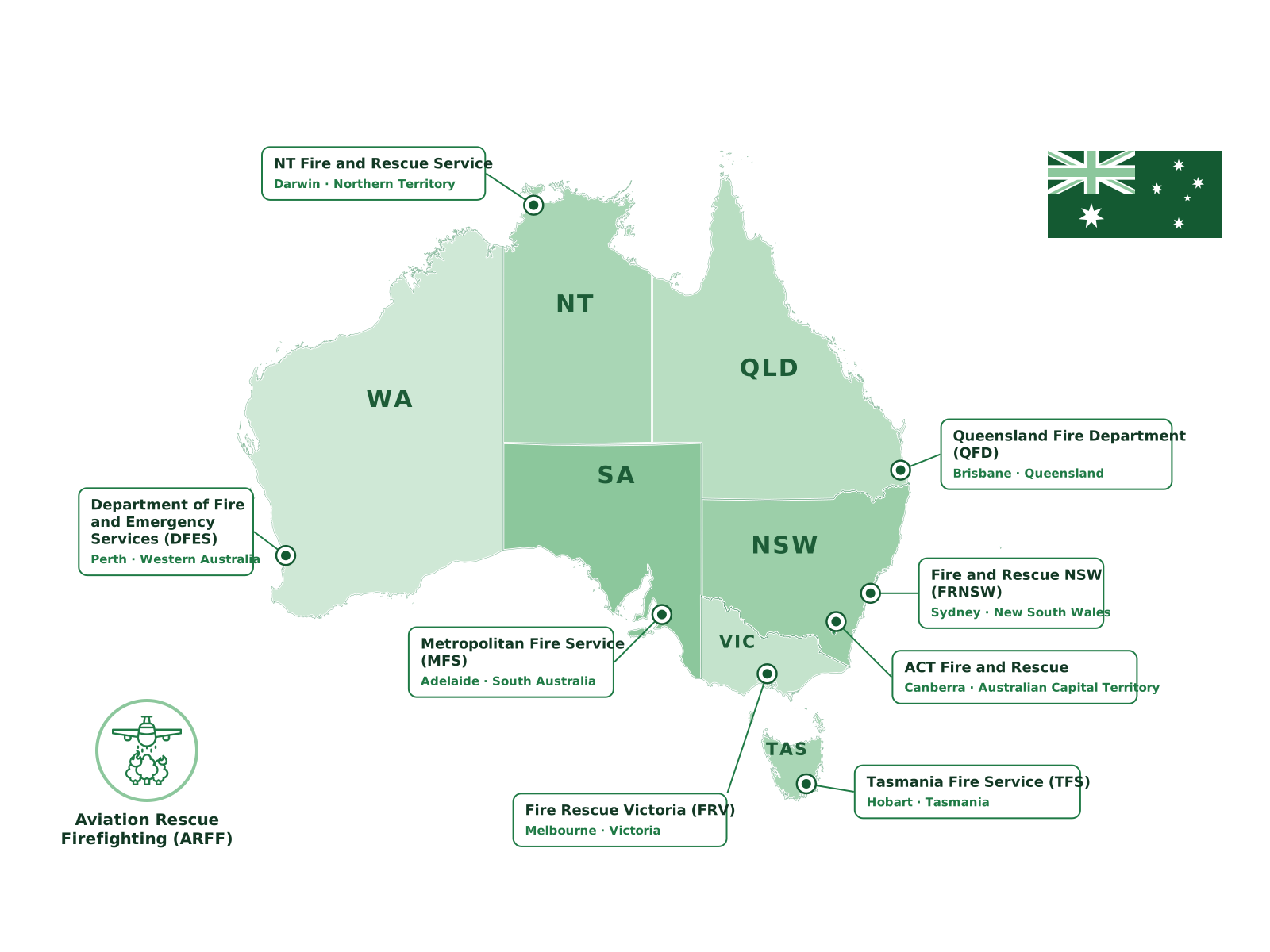
Click your state or territory on the interactive map below to jump straight to its fire service practice questions-

What Is the Firefighter Written Exam, and Why Is It Required in Australia?
The firefighter written exam, also called the firefighter aptitude test, entry exam, or pre-employment exam, is the screening test every candidate sits before they're accepted into recruit training. It isn't testing firefighting knowledge itself, since you aren't expected to know the job yet. Instead, it assesses the underlying abilities you'll need to learn the role and perform it well once you're in it, things like math, numerical reasoning, reading comprehension, mechanical aptitude, and problem solving. Passing it is a mandatory step in the recruitment process, not an optional formality.
As mentioned above, Australia doesn't run firefighter recruitment through one national body. Depending on where you apply, each fire service, department and agency runs it's own process through their state fire service. That's thousands of firefighters employed across Australia, but not under one organisation or one recruitment process.
The reason the test matters so much comes down to what the job actually involves. Depending on the service, firefighters respond to structure and bushfires, road accidents, rescues, hazardous materials, medical emergencies, and natural disasters, on top of maintaining equipment and staying ready to respond at any time. You won't get hired on physical ability alone, which is exactly why every service builds some form of cognitive or aptitude assessment into its recruitment process.
The exact test differs by state, and so does who runs it. Some services administer their own assessment, while others bring in an external provider. What stays fairly consistent is the type of skills tested: numerical reasoning, verbal or reading skills, mechanical reasoning, abstract or logical reasoning, and sometimes spatial reasoning or a behavioural assessment. How those areas are weighted, and which ones show up at all, depends on the specific service, as outlined for each one below.

Firefighter Aptitude Test Tips
- Confirm exactly which service you're applying to before you start preparing. The test, and who administers it, changes from state to state.
- Practise under timed, no-aids conditions where you can. QFD's test, for example, doesn't allow a calculator, notes, or pens.
- Brush up on every core area, not just your strongest one. Most services test across several sections at once, not a single skill.
- Expect more than one assessment. Several services pair the aptitude test with a video interview, written response, or additional psychometric testing.
- Check whether you need to rank, not just pass. FRV, for instance, only advances its highest-scoring candidates, not everyone who clears the minimum standard.
Sample Firefighter Test Questions - Across State and Territory
Below, you'll find free sample questions covering the firefighter exams for QFD, FRV, FRNSW, and ACT Fire and Rescue, organised by state and territory so you can jump straight to the test that applies to you. Each set mirrors the actual format and difficulty of the real exam, including the same subject areas and question types you'll face on test day.
To get the most out of the practice questions, treat them as a timed simulation rather than a casual quiz. Work through each set without pausing and only check your answers once you've finished, since this is the best way to see where your starting score stands before you begin focused preparation. If you get a question wrong, read the explanation before moving on. Understanding why an answer is correct is what actually improves your score, not just seeing the right choice.
Keep in mind that free sample questions are a starting point, not a complete substitute for full preparation. They're useful for identifying your weaker areas, for example mechanical reasoning versus reading comprehension, so you know where to focus your study time. If you find you need more structured practice, each state's section below links to a full preparation course built specifically for that service's exam.

Queensland Fire Department (QFD)
Territory: Queensland
Firefighters: Around 2,200 professional firefighters plus roughly 2,000 on-call auxiliary firefighters, staffing more than 240 fire and rescue stations statewide
Average Salary: $59,730 (recruit) to $84,494 (top firefighter rank), base pay before shift penalties and super, per the QFD Certified Agreement 2025
Operations: Urban and regional fire and rescue across Queensland, including structure and bushfire response, road crash rescue, and hazardous materials incidents
QFD candidates sit an online cognitive ability test with two components: mechanical reasoning, which covers forces, movement, gears, and pulleys, and core abilities, which covers literacy, numeracy, problem solving, and analytical aptitude. It's timed, and you can't use a calculator, notes, or pens, so accuracy under pressure matters as much as knowing the material.
The two samples below give you a feel for each half of that test:
Mechanical Aptitude: This question is about wind resistance, not bird biology. Think about how much surface area each wing position presents to the airflow, and which orientation lets air pass with less drag, the same principle that makes a crumpled piece of paper fall faster than a flat sheet.
Abstract Reasoning: Treat each frame as a continuation of the one before it: look at where an element "ends" at the right edge of one frame and whether it "begins" again at the left edge of the next. Track the spacing and size pattern across all five frames first, then eliminate any option that breaks that continuation, rather than picking whichever one looks visually balanced.
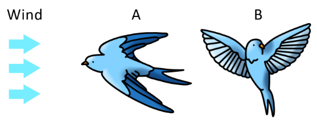
Which bird will find it easier to fly? (If equal, mark C.)

Choose the image that completes the pattern
The correct answer is 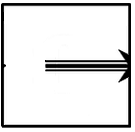 .
The sequence of squares presents consecutive frames in which the end of each of them is the beginning of its following one. The “beginning” is the left side of the frame. The “end” is the right side of the frame, e.g. The arrow head in the second frame from the left is the continuation of the arrow tail in the right side of the leftmost frame.
Noticing that, one should also notice that all arrows are of same size and keep the same distances from one another. If an arrow begins in one frame, it should continue in another frame.
Solution: The third frame “ends” with an arrow head missing a fraction of its tip. Thus, the missing frame should “begin” with a tip of an arrow head, which leaves option 5 only. As these minor details are very hard to discern, another approach to solving the question would be to notice that frame 5 “begins” with the top of an arrow head. Since this frame is the continuation of the previous frame, the missing frame should “end” with the tail of the arrow and a small part of its head. We can thus eliminate options 2, 3 and 4. Option 1 can be eliminated as well since the arrow is too long.

Fire Rescue Victoria (FRV)
Territory: Victoria (Melbourne metropolitan area and major regional centres)
Firefighters: Around 3,800 operational firefighters within a workforce of roughly 4,700, across 85 fire stations (47 in metropolitan Melbourne, 38 regional)
Average Salary: $58,066 (recruit) to $90,669 (top firefighter rank), base pay before shift penalties and super, per FRV's published remuneration figures
Operations: Fire suppression and emergency response across Melbourne and Victoria's major regional centres, working alongside the volunteer-based CFA in regional areas
FRV's Written Selection Test (WST) covers four areas: literacy, numeracy, abstract reasoning, and mechanical reasoning. It's computer-based and administered by the Australian Council for Educational Research (ACER), and you need to meet the required standard across all four areas. Passing isn't necessarily enough on its own, since FRV only advances its highest-ranking candidates to the next stage.
Literacy: This question asks for the passage's main point, not a detail from it. Work out first whether the author comes down clearly on one side of the issue or presents it as unresolved, then look for the answer option that matches that overall stance rather than one that only restates part of the argument.
Numeracy: Fractions with different denominators can't be subtracted directly. Find a common denominator before doing anything else, and double-check that your final answer is already in its simplest form before selecting it.

Fire and Rescue NSW (FRNSW)
Territory: New South Wales (cities and towns statewide)
Firefighters: About 6,820 firefighters (permanent and on-call combined) across 335 fire stations, the busiest fire service in Australia at over 124,000 incidents a year
Average Salary: $81,118 (recruit) to $110,237 (top firefighter rank), base pay before shift penalties and super, per the Crown Employees (FRNSW Permanent Firefighting Staff) Award
Operations: Fire, rescue, and hazardous materials response in cities and towns across NSW
FRNSW's online psychometric assessment, delivered through Criteria, covers three areas in one sitting: cognitive aptitude, emotional intelligence, and mechanical reasoning. It's completed alongside a video interview as part of the same recruitment stage, so you're being assessed on more than just the test score.
Logic Test: Don't assume a letter sequence only moves in one direction. Check whether it skips forward through the alphabet consistently, or whether it reverses partway through, and if so, exactly where that reversal happens and how many letters are skipped each time before and after it.
Spatial Reasoning: Look for one visual rule that holds true across most of the images, shading, size, or position are common ones, then test that exact rule against every option rather than stopping at the first one that seems to fit. The odd one out is whichever option breaks the rule the others all follow.
V | S | P | W | T | Q | ?
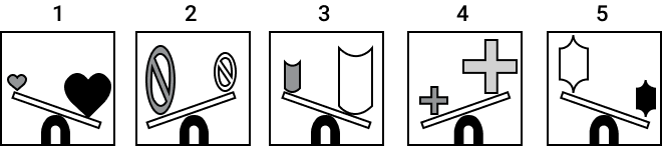
Choose the odd one out.

ACT Fire and Rescue (ACT)
Territory: Australian Capital Territory (Canberra)
Firefighters: Approximately 330-350 firefighters and staff across nine fire stations, with 35 additional positions funded in the 2026-27 ACT Budget
Average Salary: $90,054 (recruit, a composite figure that already includes shift loading and allowances) to $114,872 (top firefighter rank), per the ACT Fire & Rescue Enterprise Agreement 2024-2026
Operations: Structure and bushfire response, vehicle accidents, hazardous materials, and rescue incidents across Canberra and the ACT
ACT Fire and Rescue's online aptitude test covers five areas in one sitting: verbal reasoning, numerical reasoning, abstract reasoning, spatial reasoning, and situational judgment. After the aptitude test, you'll also need to submit a written and video response addressing the role's selection criteria.
Working with Data: Go through each proposed question one at a time and check it only against the columns that actually exist in the table. A question can sound completely reasonable and still be unanswerable, if the table doesn't contain the specific information it depends on, it's not one of the correct options, no matter how sensible it seems.
Reading Comprehension: Stick to what the passage explicitly states rather than what tends to be true about the topic in general. Watch for answer options that sound firm and confident but actually overstate, reverse, or contradict the passage's own logic.

Additional Australian Fire Services
Beyond the four services above, Western Australia, South Australia, Tasmania, the Northern Territory, and Aviation Rescue Firefighting each run their own recruitment process and assessment. Each uses its own online cognitive or psychometric test as one stage in a longer selection process that also includes a physical aptitude test and an interview, but none of them have published the kind of detailed, section-by-section breakdown that QFD, FRV, FRNSW, and ACT provide, so treat the test notes below as a general shape rather than a full specification.
WA Department of Fire and Emergency Services (DFES) at a Glance
Territory: Western Australia (Perth and major regional centres)
Firefighters: Around 1,249 career firefighters and more than 600 non-operational staff, across 25 metropolitan stations and 4 country stations, supported by over 29,000 volunteers statewide
Average Salary: Not shown here. DFES's current rates weren't confirmable from a verified primary source at time of writing (its published 2024 figures predate a December 2025 pay increase); current figures are at dfes.wa.gov.au/careers
Operations: Structure fires, road crash rescue, hazardous materials, and technical rescue, plus land and sea search-and-rescue support alongside WA Police and St John WA
DFES's online cognitive and aptitude testing is Stage Two of the recruitment process, completed after the initial application and before the beep test and physical circuit assessments.
SA Metropolitan Fire Service (MFS) at a Glance
Territory: South Australia (greater Adelaide and major regional centres, more than 90% of the state's population)
Firefighters: Around 1,200 personnel, full-time and retained (part-time), across 37 fire stations (20 metropolitan, 17 regional)
Average Salary: $86,411 (recruit) to $134,638 (top firefighter rank), base pay before shift penalties and super, per the SA Metropolitan Fire Service Enterprise Agreement 2025
Operations: Urban firefighting, road crash rescue, and hazardous materials response across South Australia
MFS full-time recruitment includes an online psychometric assessment, followed by physical aptitude testing and an interview.
Tasmania Fire Service (TFS) at a Glance
Territory: Tasmania (statewide)
Firefighters: Around 327 career firefighters plus roughly 5,000 volunteers, across more than 230 brigades, with four career brigades in Hobart, Launceston, Burnie, and Devonport
Average Salary: $74,169 (recruit) to $105,801 (top firefighter rank), base pay before shift penalties and super, per the Firefighting Industrial Agreement of 2025
Operations: Structure and bushfire response statewide, run as a combined career and volunteer service
TFS candidates complete a Cognitive Ability and Psychometric Assessment as one of nine stages in the application process, evaluating aptitude and workplace behavioural traits.
NT Fire and Rescue Service at a Glance
Territory: Northern Territory, including Darwin, Alice Springs, Katherine, and Tennant Creek
Firefighters: Around 234 firefighters plus roughly 42 auxiliaries, across 27 fire stations (11 permanent, 16 volunteer-staffed)
Average Salary: $80,285 (recruit) to $108,074 (top firefighter rank), base pay before shift penalties and super, per the NT Public Sector Fire and Rescue Service Enterprise Agreement
Operations: Structure fires, road accidents, and hazardous materials response across the Territory
NT Fire and Rescue's Cognitive and Psychometric Assessment is Stage 3 of a five-stage process, delivered online after the beep test and before the Physical Aptitude Test and interview.
Aviation Rescue Firefighting (ARFF) at a Glance
Territory: National, operating at 27 of Australia's busiest airports
Firefighters: More than 900 operational and support personnel
Average Salary: Around $122,167 a year on average (reported salary data; ARFF is run federally by Airservices Australia rather than under a state award, so there's no single published pay table)
Operations: Aircraft rescue and firefighting, available 24/7 for aviation incidents and other airport emergencies
ARFF recruitment includes a suite of online testing before candidates move to the Physical Aptitude Test and medical assessment.
The three samples below give you a feel for the kind of combined cognitive and behavioural testing used across this group of services.
Matrices Test: Don't try to solve this figure by figure. Track two rules at the same time: how one shape type rotates or changes as you move across a row, and how shading or colour cycles as you move down a column. The correct answer has to satisfy both rules at once, so use each rule to eliminate options rather than picking whichever single image looks right.
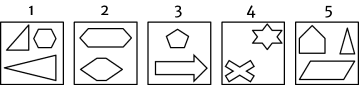
Inductive Reasoning: Look past the shapes themselves and count something numeric in each frame, sides, angles, or repeated elements. Questions in this format usually come down to one frame breaking a numeric total that holds consistently across all the others, not a visual symmetry or size difference.
Situational Judgement Test: Judge each of the four statements against the specific situation described, not against each other in the abstract. The most appropriate response is usually the one that gathers information and treats the person with respect before acting on it, and the least appropriate is usually the one that leans on authority or urgency to justify skipping that step.
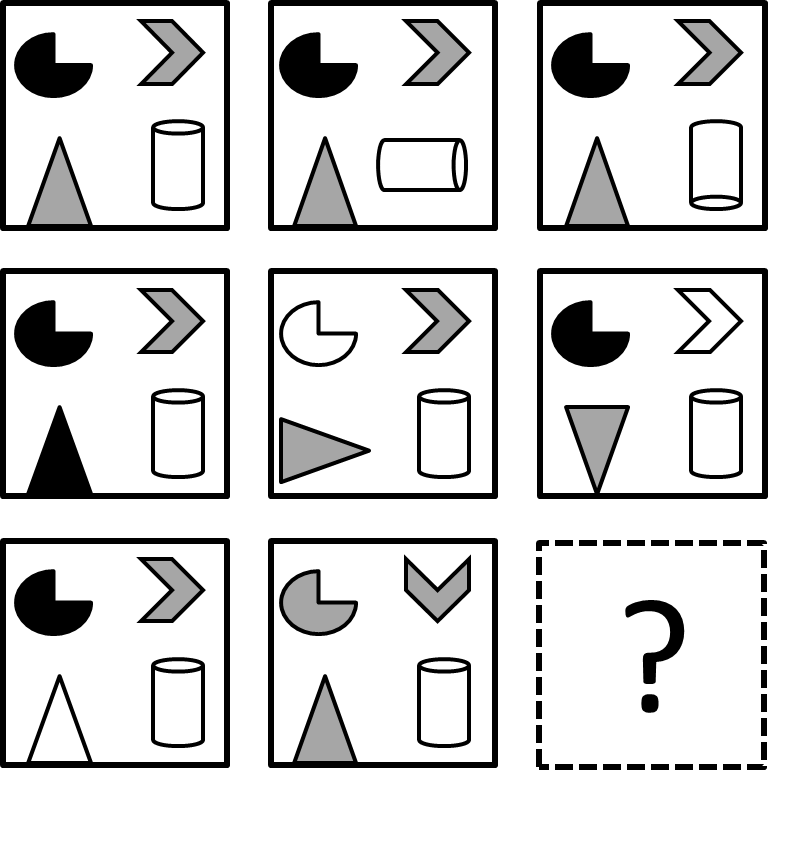
The drawings in the box go together in a certain way. Choose the drawing that goes where you see the question mark.
You are on a shift and your crew is sent to carry out a routine welfare check on an elderly resident. On arrival the resident, who is confused and agitated, tells you that he does not want firefighters in his home and asks you to leave. There are no visible signs of immediate danger but the original call was made by a concerned neighbour who reported that the resident had not been seen for several days.
Statements:
A. Respect the resident's wishes immediately and leave, reporting back to your captain that he refused entry and appeared agitated.
B. Remain calm, introduce yourself, explain why you are there, and gently try to engage the resident in conversation to assess whether he is safe before making any decision about leaving.
C. C. Enter the property anyway as the welfare concern from the neighbour justifies overriding the resident's refusal.
D. Tell the resident firmly that given the welfare concern you have a duty to ensure he is safe, and that if he does not cooperate you will have no choice but to force entry.
Read the scenario above and then answer which statement you feel is MOST APPROPRIATE and which answer you feel is LEAST APPROPRIATE
Visit the following pages for additional test practice -
Didn't Find What You Need? Try Our General Firefighter Written Exam Prep
Looking to ace your firefighter aptitude test and stand out from the competition?
Our general firefighter prep course covers every essential sub-section of firefighter exams, including Numerical Reasoning, Reading Comprehension, Mechanical Reasoning, and Abstract Reasoning, even if none of the specific services above match the one you're applying to.
What Is Australia’s Firefighter Hiring Process?
Becoming a professional firefighter in Australia isn't a single job application, it's a structured, multi-stage recruitment process run by the state or territory service you're applying to, and each stage has to be passed before you move to the next. While the exact steps vary by service, the process generally looks like this:
- Application: You apply directly to the relevant state or territory fire and rescue service. Recruitment isn't continuous, most services, including DFES in Western Australia, run periodic campaigns rather than an ongoing intake, so timing your application to an open campaign matters as much as preparing for it.
- Aptitude or Written Exam: An online cognitive or psychometric test assessing the underlying skills needed for the role, such as numerical reasoning, mechanical reasoning, and verbal or abstract reasoning. Format and content vary by service.
- Physical Aptitude Testing: A beep test, circuit, and other physical tasks that measure the fitness and strength needed for the job.
- Interview or Further Assessment: A panel interview, sometimes combined with a video response or written task addressing the service's selection criteria.
- Medical and Background Checks: A medical clearance, along with police and background checks and verification of any required qualifications.
- Recruit Training: A paid training course at the service's own academy, typically measured in weeks rather than years, DFES's program runs for 15 weeks at its Forrestfield academy. According to the Public Safety Training Package, administered through training.gov.au, recruits typically work towards a Certificate II or Certificate III in Public Safety (Firefighting Operations), supervised throughout by experienced firefighters and training officers.
- Probation and Qualification: A probationary period at a station, after which you're a fully qualified career firefighter with that state or territory's service. Pay continues to rise from here as you move up through firefighter rank, on a scale set by each service's own enterprise agreement.
Firefighting in Australia- What Happens After You Pass the Test
What Does a Firefighter Actually Do?
The job goes well beyond putting out fires. Depending on the service, firefighters respond to structure and bushfires, road accidents and vehicle rescues, hazardous materials incidents, medical emergencies, and natural disasters. Between callouts, the job includes maintaining equipment and vehicles, ongoing training, and staying ready to respond at any hour, since most services run 24-hour rotating shifts. Firefighters also carry out community-facing work: conducting fire safety education programs and inspecting buildings to check they meet local fire regulations, both part of the nationally recognised Public Safety (Firefighting Operations) training all recruits complete.
Specialisations and Career Progression
Firefighting in Australia isn't a single fixed role, it's a career with a defined progression and several paths to specialise. Pay and rank typically move together: DFES in Western Australia, for example, structures its ranks from 5th Class Firefighter through to 1st Class Firefighter and Senior Firefighter, and most other services use a comparable grading system set out in their own enterprise agreement. Beyond general firefighting, experienced firefighters can move into specialist areas including fire investigation, air operations, urban search and rescue (USAR), and hazardous materials response, or move into training and supervisory roles through further public safety qualifications such as a Certificate IV in Public Safety (Firefighting Supervision).
Firefighter Salaries Across Australia
Pay varies meaningfully by state and territory, since each service negotiates its own enterprise agreement rather than following a single national award. Base rates below run from recruit pay to the top firefighter rank (before senior officer ranks, shift penalties, and superannuation):
| Service | Recruit | Top Firefighter Rank |
|---|---|---|
| MFS (South Australia) | $86,411 | $134,638 |
| ACT Fire and Rescue | $90,054 | $114,872 |
| FRNSW (New South Wales) | $81,118 | $110,237 |
| NT Fire and Rescue Service | $80,285 | $108,074 |
| TFS (Tasmania) | $74,169 | $105,801 |
| FRV (Victoria) | $58,066 | $90,669 |
| QFD (Queensland) | $59,730 | $84,494 |
| ARFF (national) | Averages around $122,167 a year (reported figure; run federally, no published award range) | |
DFES in Western Australia isn't included in the table above, its current award rates weren't confirmable from a verified source at time of writing; current figures are available at dfes.wa.gov.au/careers.
Pay and Benefits
On top of base pay, firefighters on shift rosters typically receive penalty rates and allowances for night, weekend, and public holiday shifts, which is part of why take-home pay runs higher than the base figures above. Employers also contribute superannuation at Australia's standard Superannuation Guarantee rate, currently 12% of ordinary earnings. Beyond pay, firefighting is public-sector, essential-service employment: positions come with a defined rank structure, clear progression, and access to further nationally recognised qualifications as you move into specialist or supervisory roles.
Firefighter Written Exam FAQs
Difficulty varies by service and by person, but these tests are specifically designed to be challenging under time pressure, not just difficult content. Most candidates don't fail because the maths or reasoning itself is advanced, they run out of time, or they're unfamiliar with question formats, abstract reasoning patterns, data interpretation tables, mechanical diagrams, that don't look like anything from school. Competition adds to the real difficulty too: New South Wales' most recent Permanent Firefighter Recruitment Campaign received almost 5,000 applications, and Fire Rescue Victoria only advances its highest-ranking candidates, not everyone who clears the minimum standard. Preparing with the actual question formats, under timed conditions, is what closes that gap.
Effective preparation covers three things: the content itself (numerical, verbal, mechanical, and abstract reasoning, depending on your service), the specific question formats your test uses, and working under realistic time pressure so test day isn't the first time you've felt it. The free sample questions on this page are a good starting point to see what you're working with. For full preparation, JobTestPrep's state-specific prep courses are built around each service's actual test structure, with practice questions, timed simulations, and detailed answer explanations for every section.
Free PDFs are usually static, undated, and copied from site to site, so there's no way to tell whether they reflect a test's current format or a version from years ago. Recruitment processes change: sections get added, testing providers switch (Victoria's WST, for example, is administered by ACER specifically, not every provider used historically), and requirements shift between campaigns. A PDF can't update itself, and it can't give you a timed, interactive practice environment, which is a significant part of what these tests actually assess.
AI tools don't know what's actually on QFD's, FRV's, or FRNSW's test, they're speculating based on general patterns, not working from the real exam. An AI-written mechanical reasoning question can apply a principle incorrectly, and an AI-written explanation can be confidently wrong, which is worse than no explanation at all when you're learning from your mistakes. The questions on this page, by contrast, are built from the actual structure and content of each service's real test, not a plausible-sounding guess at what it might contain. Practising with speculative material risks teaching you the wrong instincts going into the real test.
It depends on the service, but several explicitly don't allow one. QFD's cognitive ability test, for example, is timed and doesn't permit a calculator, notes, or pens, so candidates are tested on working through numerical reasoning accurately by hand and under pressure. Assume no calculator unless your service's own candidate information confirms otherwise, and practise your mental maths and estimation accordingly.
Nothing beyond general high school maths: fractions, percentages, ratios, basic algebra, and reading data from tables and charts. The challenge isn't the difficulty of the maths itself, it's applying it quickly and accurately without a calculator, often inside word problems or alongside unfamiliar units. If your mental arithmetic with fractions and percentages is rusty, that's the specific area worth refreshing before test day.
There's no single Australia-wide pass mark, each service sets and manages its own, and most don't publish an exact cut-off. What's consistent is that clearing the minimum standard doesn't guarantee you a place: FRV, for instance, only advances its highest-ranking candidates to the next stage, not everyone who passes. Treat every section as one to score well on, not just pass, since your ranking against other applicants matters as much as hitting a minimum threshold.
Most services run two layers of physical testing: an initial fitness screen, usually a beep test (shuttle run) measuring cardiovascular endurance, and a more comprehensive Physical Aptitude Test (PAT) covering strength and job-simulated tasks such as hose drags, ladder work, equipment carries, and confined-space or casualty-rescue simulations. Where this sits in the process varies by service, there's no single fixed order across Australia. NT Fire and Rescue Service, for example, runs an early beep test, then its cognitive and psychometric assessment, followed by a full PAT later on, while other services sequence it differently, so confirm your own service's order once you've applied rather than assuming it matches another state's process.
The exact fitness benchmark, such as a required beep test level, isn't always published publicly and varies by service, but these standards are set to reflect real job demands rather than an arbitrary fitness bar. Train both cardiovascular endurance and functional strength, not just one or the other: shuttle-run style interval training targets the same fitness the beep test measures, while practising job-simulated movements, carrying weighted loads, dragging equipment, climbing under fatigue, prepares you for PAT stations more directly than general gym work alone. Australian services don't use the North American CPAT specifically, but it tests a similar mix of cardio endurance and functional strength under time pressure, so our CPAT preparation resources can still serve as a useful general conditioning reference. And it's worth building fitness as a habit rather than a one-off push, since firefighting is physically demanding throughout a career, and most services expect firefighters to maintain that standard well beyond recruitment.
This varies by service and isn't always published in detail, but most online aptitude assessments run somewhere between 45 minutes and two hours in total, split across several timed sections. ACT Fire and Rescue's test, for example, covers five separate areas, verbal, numerical, abstract, spatial reasoning, and situational judgment, in one sitting. Check your own service's candidate information pack for exact timing once you've applied, since this is one detail each service does publish directly to applicants.
Most services pair the written test with a panel interview, and several, including FRNSW, now use a video-response format instead of or alongside an in-person panel. Expect behavioural and situational questions, how you've handled pressure, teamwork, or a difficult decision, questions about why you want to join that specific service, and sometimes a written or video response addressing stated selection criteria, as ACT Fire and Rescue requires. Preparing genuine examples from your own experience matters more than guessing exact questions in advance. Our Firefighter Interview Prep course covers the behavioural and situational formats services actually use, with example questions and guidance on structuring strong answers.
No, but there are vision standards to meet, assessed as part of the medical clearance stage rather than the written test. Most services' candidate information packs set out specific requirements around visual acuity and colour vision, and corrective lenses, glasses or contacts, are generally accepted as long as your corrected vision meets the standard. Check your specific service's candidate information pack for its exact requirements rather than assuming, since these do vary.
There's no fixed annual schedule across Australia. Most services run periodic recruitment campaigns rather than accepting applications year-round, and timing shifts from one campaign to the next. The safest way to avoid missing a window is to register for alerts directly through your state or territory service's own careers page, since the next campaign's dates usually aren't announced until the current one has finished its later stages.
These come up constantly in Victorian recruitment specifically. WST is the Written Selection Test, FRV's online aptitude assessment. ACER is the Australian Council for Educational Research, the organisation that administers it. PAT is the Physical Aptitude Test, the fitness stage most services run alongside or after the written exam. If you come across an unfamiliar acronym on your own service's recruitment page, check their candidate information pack, since the same term can mean something different from one service to the next.
JobTestPrep has been preparing candidates for pre-employment assessments since 1992, including thousands of aspiring firefighters working through their state's entry exam. The practice questions on this page are built to mirror the actual structure and difficulty of each service's real test, not generic filler, and our full prep courses go further with timed simulations and detailed explanations for every question.
Looking for an AU Firefighter Exam Course? Find Them All Here-
Customer reviews


