ARFF Written Exam Prep and Practice (2026)
The Airservices Australia Aviation Rescue Fire Fighting (ARFF) Online Ability Assessment is a pre-employment test used by Airservices Australia to screen Aviation Rescue Fire Fighter recruit candidates, delivered online through the test provider SHL.
Try our free ARFF practice test covering the assessment's key sections. Those practice questions are just a sample from our complete ARFF PrepPack and practice library which include timed section simulations, detailed answer explanations, and realistic ARFF Online Ability Assessment conditions, built to improve your pass rate on your first attempt.
1-Month Access

The Airservices Australia ARFF Online Ability Assessment is a pre-employment assessment developed by Airservices Australia, delivered online through the test provider SHL, and used to screen applicants for the Aviation Rescue Fire Fighter Recruit Course ahead of the Physical Aptitude Test and Assessment Centre stages. Online testing is sent out once applications for a recruitment campaign close.
Airservices Australia's Aviation Rescue Fire Fighters (ARFF) work at 27 airports across the country, providing emergency response for aircraft incidents, structural and equipment fires, hazardous materials, and medical emergencies within the aerodrome environment, and are required to reach any point on an active runway within three minutes of an alert. Beyond emergency response, ARFF crews carry out fire safety inspections, vehicle and equipment maintenance, and ongoing physical and technical training between callouts. More detail on the role is available on Airservices' own careers page.
Recruitment runs through a staged process: after you submit an application, Airservices sends out online testing, which is the ARFF Online Ability Assessment covered on this page. Candidates who pass move on to a Physical Aptitude Test (PAT), then an Assessment Centre, before being placed into a Talent Pool to await a position offer at one of Airservices' 27 airport locations. The online assessment is the first hurdle in this process, and Airservices only carries forward results from a candidate's earliest application if multiple applications are submitted, so there's no advantage to reapplying for a better score.
In each question, you are given one or two grids with a blank part in their shape. This blank part is marked with a question mark. Your goal is to determine which of the five answer options could fit and complete the missing part.
Choose the correct three figures to complete the sequence:
The correct answer is: 
All shapes move to the right one step each row, where the rightmost shape moves to the leftmost position. The shading pattern is correlated with the position of each shape: the left shape is shaded in its top half; the middle shape is shaded in its bottom half; and the right shape is shaded in its left half.
The three cogwheels are joined and are moving very quickly. Which wheel is moving faster than the others? Please select a single answer from the three options listed.
Read the scenario and then answer which statement you feel is MOST APPROPRIATE and which answer you feel is LEAST APPROPRIATE
You are on a shift and your crew is sent to carry out a routine welfare check on an elderly resident. On arrival the resident, who is confused and agitated, tells you that he does not want firefighters in his home and asks you to leave. There are no visible signs of immediate danger but the original call was made by a concerned neighbor who reported that the resident had not been seen for several days.
We've created a comprehensive firefighter aptitude exam prep course for the Airservices Australia Aviation Rescue Fire Fighting (ARFF) recruitment process designed to help you succeed. Our course closely mimics the actual test conditions and platform, allowing you to identify and improve your weaker areas. With this focused preparation, you'll be confident and ready to excel on test day.
Why preparation matters: the ARFF Online Ability Assessment is completed online through SHL, strictly timed, and taken within a set testing window with no option to reuse a previous score if you submit more than one application. There's no pausing the clock to think something through, and once you submit an exam you can't go back to it. Our practice tests are timed to match those same real conditions, so when exam day comes, the pressure of the countdown won't be something you're feeling for the first time.


At JobTestPrep, we've helped thousands of candidates pass competitive hiring assessments since 1992. Our materials are designed by psychometric experts and updated based on real candidate feedback to reflect the latest test formats.

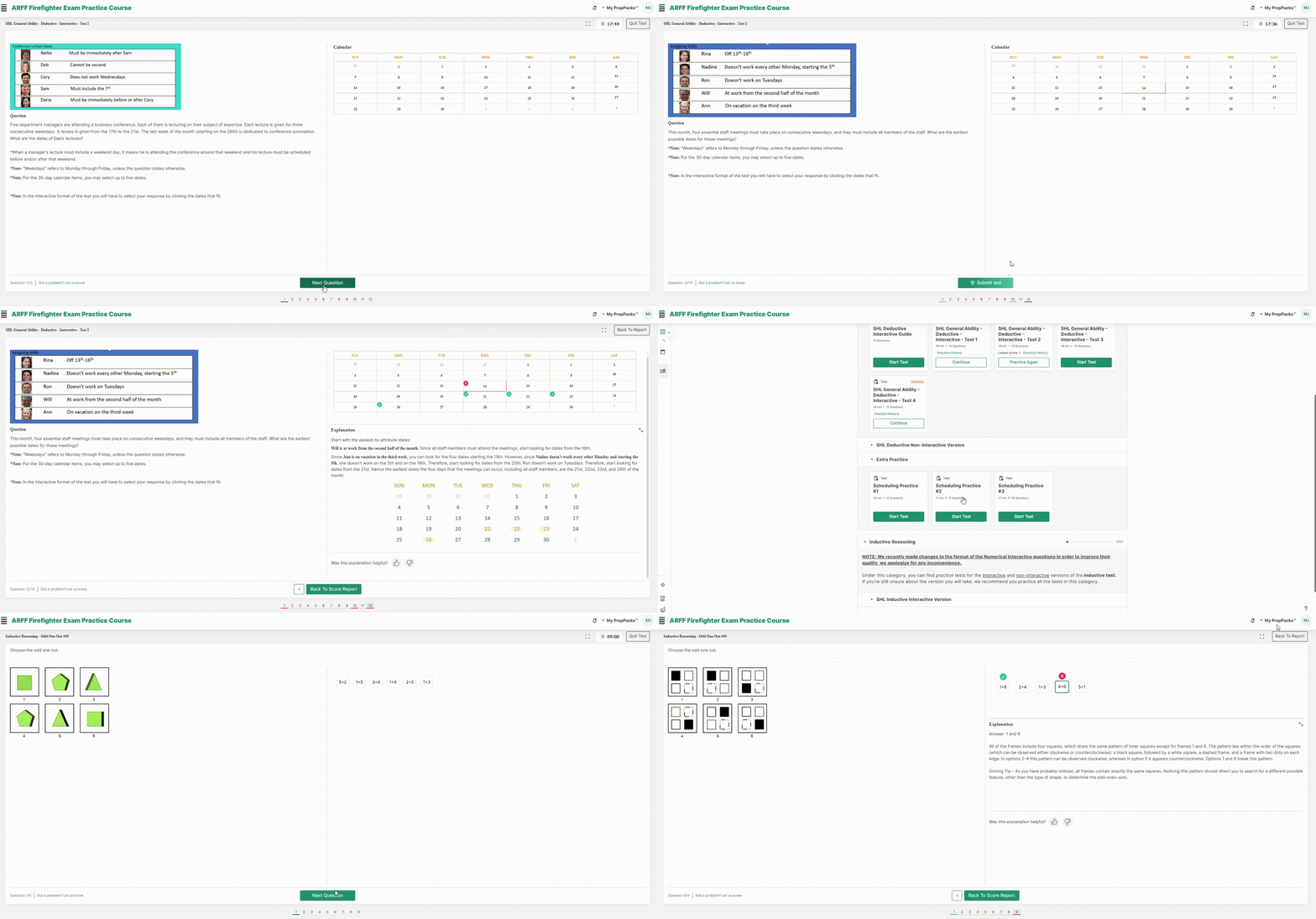
Tests your reasoning ability across numerical, deductive, and inductive question types, working with data, rules, and patterns under time pressure.
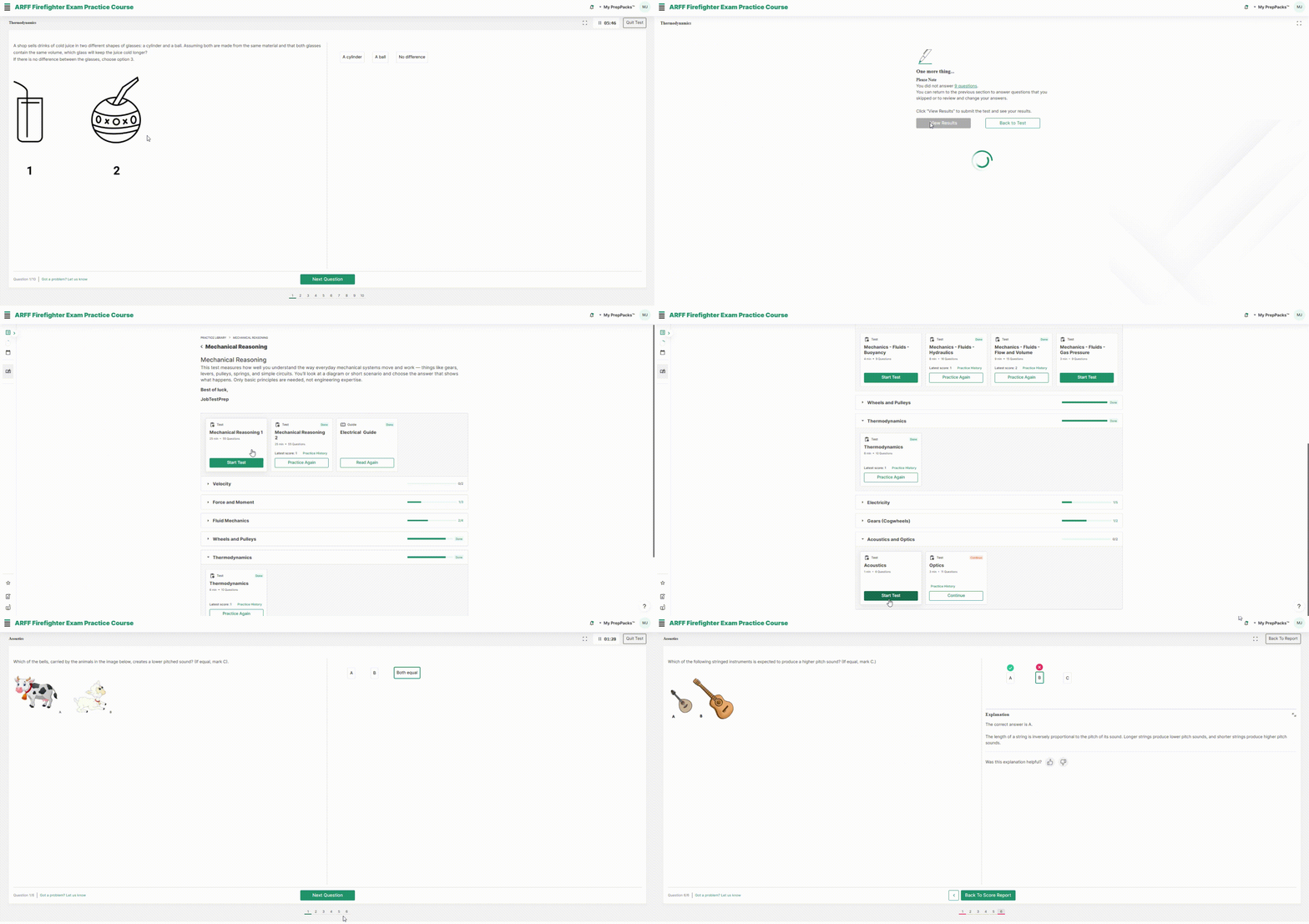
Tests your understanding of everyday mechanical systems, including velocity, force and moment, fluid mechanics, wheels and pulleys, thermodynamics, and electricity.
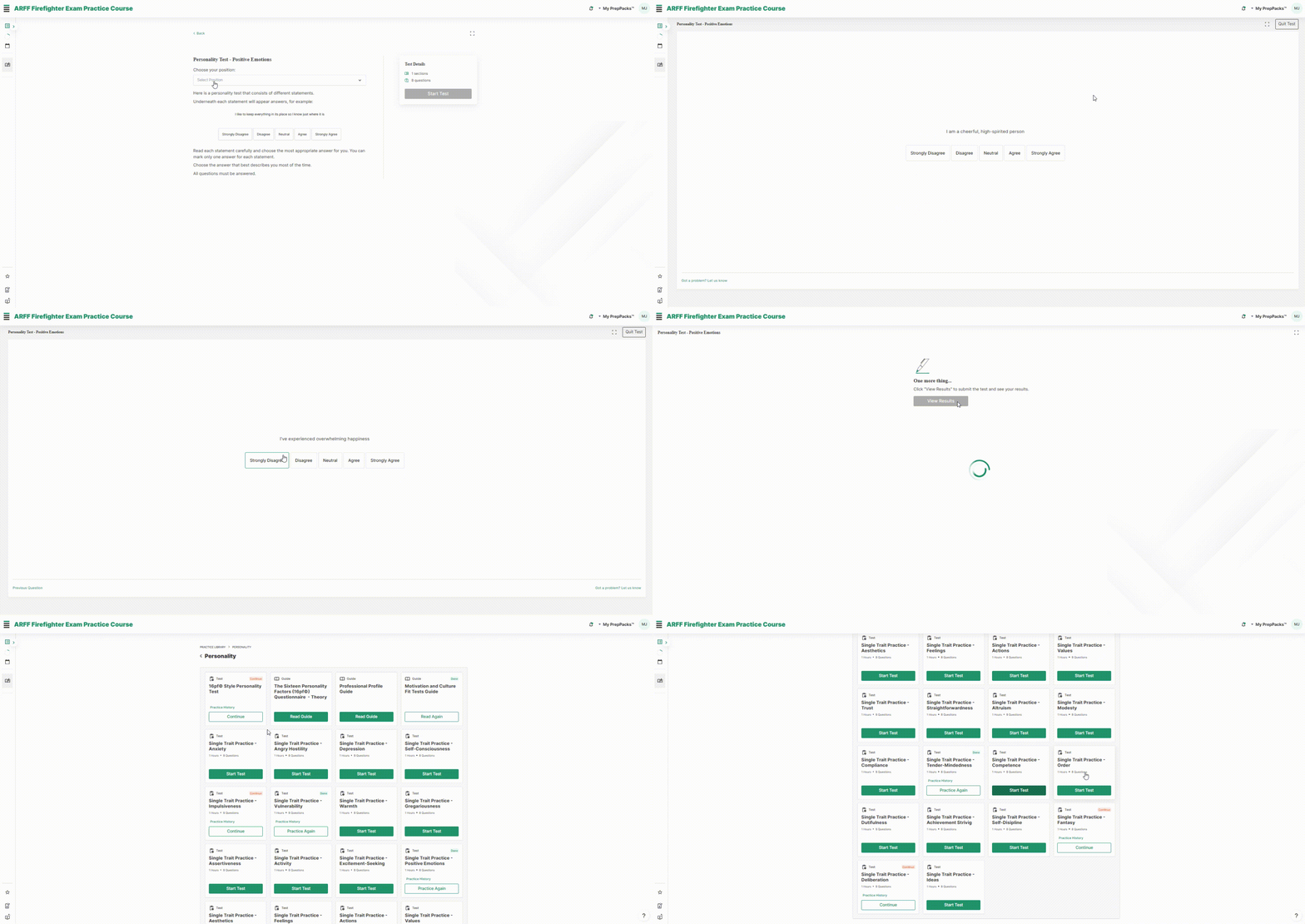
Tests your natural working style and behavioural traits through a personality questionnaire, best approached by answering honestly and consistently.
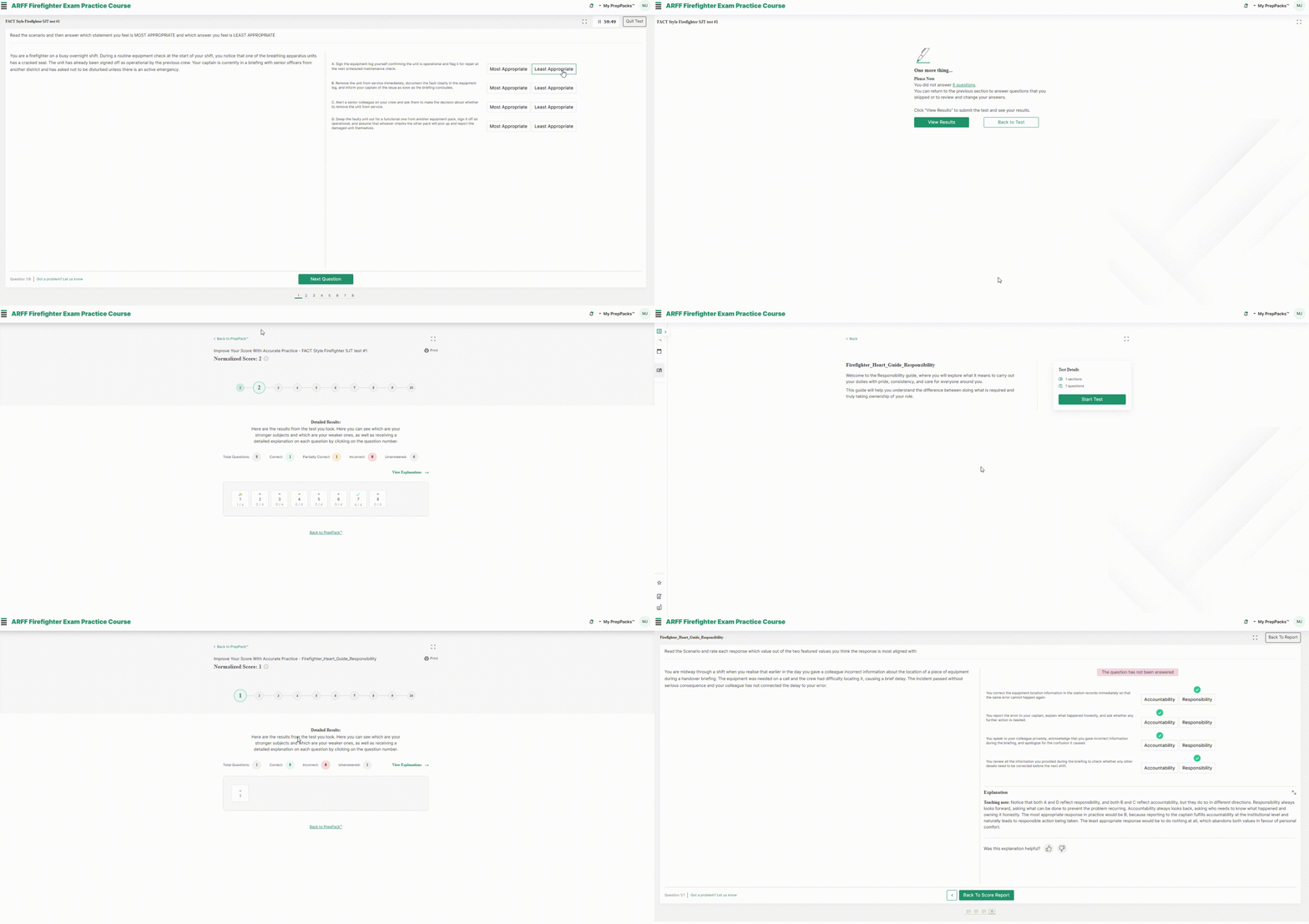
Tests how you'd respond to realistic workplace scenarios, measuring judgement against the values expected of an Aviation Rescue Fire Fighter.
The ARFF assessment is competitive, since Airservices is filling a limited number of Aviation Rescue Fire Fighter positions from a large applicant pool. The tests themselves are timed and cover multiple ability areas in one sitting, so most candidates find the difficulty comes from the time pressure and breadth of question types as much as any single section. Familiarizing yourself with each question format in advance is the most effective way to manage this.
If you submit more than one application, Airservices only uses the results from your earliest application, and this applies across every location you've applied to. In practice, that means there's no advantage to reapplying for a fresh attempt, so it's worth being fully prepared before you sit the assessment the first time.
Candidates who pass the online assessment move on to a Physical Aptitude Test (PAT), followed by an Assessment Centre. Successful candidates are then placed into a Talent Pool to await a position offer at one of Airservices' airport locations.
You will have instant access to your PrepPack, which includes all your practice tests. You can start practicing immediately, learning from detailed explanations and guides, while tracking your performance with accurate, tailored questions to help you understand the correct approach to solving your assessment.
After your purchase, you will receive two emails. The first will contain your payment receipt, and the second will include a login link along with information about our general terms, conditions, and refund policy. To access your PrepPack, simply log in and reset your password. You can use the prep pack as many times as you want. Your progress is saved in your account, allowing you to revisit previous attempts. Our performance tracker helps you focus on the test sections that require more attention. You can purchase more than one pack. If you are unsure at the time of purchase, you can always upgrade later. Additionally, we offer a Premium Subscription that allows access to up to three PrepPacks at an affordable price. You can also extend your practice period. Simply contact our customer success team via c.serv@jobtestprep.com.