


Arctic Shores Assessment Test Guide and Practice [2026]
 Arctic Shores Assessment Test Guide and Practice [2026]
The Arctic Shores assessment is a task-based psychometric test used by employers such as PwC, KPMG, Deloitte, Capita and Maven Securities. Instead of answering questions, you complete a series of short interactive tasks (often called games), and your behavior in each one is scored against a large comparison group to build a profile of your cognitive abilities and work style.
Our Arctic Shores practice pack gives you realistic simulations of all 13 tasks, from Order and Balance to Predict (Night & Day), with a performance summary after every round and a step-by-step guide for each task. You’ll know exactly what each task measures and how to approach it before you log in to the real assessment.
Newly Added! Full-length simulations for Predict (Night & Day), Balance, Security and Order. Our pack now covers all 13 Arctic Shores tasks.
-
Realistic Practice Simulations, Expert Guides, and Strategies for all 13 Arctic Shores Games: Order, Security, Energy, Direction, Balloons, Pattern, Analysis, Team, Sequence, Tickets, Expression, Predict (Night & Day), and Balance.
- Additional Study Guide - Security Game Interactive Guide.
-
Newly Added! Full-length game simulations for Predict (Night & Day), Balance, Security, and Order.

24hr support

Money-back

SSL secured
What Does The Preparation Pack Include
- High-quality, user-friendly, and accurate simulations of the real games you'll face, ensuring you’re fully prepared.
- Dedicated sections for each game, featuring interactive guides with tips and strategies designed to enhance performance.
- A performance summary after each game, helping you spot the areas that need improvement.
- Practice as many times as you want to perfect your skills and boost your confidence.
The Arctic Shores Preparation Pack is the ultimate tool to help you succeed in your test!
What Is the Arctic Shores Test?
The Arctic Shores assessment is a set of interactive, game-like tasks that measure how you think and how you work, in a format that doesn’t rely on prior knowledge. Tasks include the Energy (Power Generator) task, the Team Sales task and the Tickets task.
Each employer chooses which tasks appear in its version of the assessment, so your set may differ from other candidates’. The tasks look simple, but each one measures several traits at once. Knowing what each task assesses and how you’re expected to behave is what separates prepared candidates from the rest.
Below is a detailed overview of all 13 Arctic Shores tasks.
The 13 Arctic Shores Games
Jump to any of the 13 Arctic Shores tasks:
For each task below, you’ll see how it works, the catch that trips candidates up, the traits it measures and how to prepare.

The Order Game
The Game - You are presented with three frames and must determine what the fourth frame would look like according to various characteristics, including color, direction, size, and location in the frame.
The Order game has a time limit of 15 minutes and a 1-minute time limit for each question.
The Catch - The content of the first three frames becomes increasingly complex as you move through the questions, with additional shapes progressively added. To construct the fourth frame, you must not only grasp the underlying logic of the sequence but also understand the various characteristics and how to work with their functionality. All of this must be done within a tight time limit—just one minute per frame!
Measured Traits -
- Attention to detail
- Logical reasoning
- problem-solving
Preparation - to efficiently solve each puzzle, you will have to understand the logic in each shape and how it shifts between frames, then combine your knowledge of all the shapes in the final frame.

Please note — In the real Order game, you will need to construct the final frame using buttons of the different dimensionalities. However, in our prep course, you will select the frame with the correct characteristics from a table.
The Tile Sequence Game
The game – You will be presented with a board of tiles; the icons on the tiles will light up in a sequence. Your job is to memorize the sequence and click on the tiles in the same order. The game will end after two errors in a row.
The catch – the game is adaptive, and with every round you succeed, the sequence gets longer and harder to repeat. At some point, a new type of icon is added to the game as a distraction, and you must ignore it.
Measured Traits –
- Memory
- Balancing automatic and controlled behavior
- Responses’ speed and efficiency to incoming information
Preparation – there are two elements to ace the task: a sharp short-term memory and knowing the patterns of the sequences.

The Energy (Power Generator) Game
The game – you will be presented with a power generator. Your job is to produce power by clicking the buttons. The game will end after a certain amount of clicking.
The catch – every generator can both increase and drain the amount of restored power, so with every click, there's a chance that you lose power instead of producing it.
Measured Traits –
- Learning ability
- Impulsivity
- Risk tolerance
- Pattern Recognition
Preparation – to produce maximum power, you need to learn how to recognize the rules and patterns of each generator.

Practice the Real Arctic Shores Tasks Before Test Day
- Realistic practice for all 13 Arctic Shores tasks
- A performance summary after every round
- Unlimited retakes to perfect your approach
The Direction (Arrows) Game
The game – you will be presented with three rows of arrows. Your job is to determine if the middle arrow is facing right or left. The game has 80 rounds. This game is a common psychological task and exists, for instance, in the Pymetrics Games test.
The catch – the surrounding arrows can distract you by turning in the opposite direction and changing shapes. As the game progresses, the arrows will appear more quickly. Pressing too early or too late is considered an error.
Measured Traits –
- Focus
- Attention
- Problem-solving
Preparation – this task is about focusing, paying attention, and blocking distractions in a stressful environment. The best way to prepare for this task is to practice these elements as much as possible.

The Team Sales Game
The game – you will be presented with a scenario in which your team and another team have launched the same product. Your job is to set a high or low price for your team's product. The game has 12 rounds.
The catch – the outcome of your decision is dependent on the other team's pricing.
Measured Traits –
- Decision making
- Risk-taking ability
- Learning ability
- Fairness
- Teamwork
Preparation – since both your and the other team's price will influence your reward, you must be familiar with the game's rules and teamwork factors to maximize your reward.

The Tickets Game
The game – you will be presented with two boxes that display tickets with changing numbers. Your job is to organize the tickets in the correct order. The game has 80 rounds.
The catch – each box has different rules for organizing the tickets. At first, the rules are presented to you during the game, but over time they disappear. In addition, everything is done under time pressure, and pressing too early or too late is considered an error.
Measured Traits –
- Focus
- Attention
- Cognitive processing
Preparation – in this task, you must pay attention to multiple variables. A practice simulation of the game will allow you to feel at ease in the stressful environment and achieve the maximal result with minimum errors.

The Balloon Game
The game – you will be presented with a balloon that needs to be pumped in exchange for money. At any point, you can choose to collect your money and move on to the next balloon. Your job is to earn as much money as possible. The game has 45 rounds. Many test takers are familiar with this game from the Pymetrics Balloon Game.
The catch – the balloon can burst in every pump. Once it explodes, you lose the money that you haven't exchanged, and you will move on to the next balloon.
Measured Traits –
- Pattern recognition
- Risk-taking ability
- Motivation by reward
- Drive
Preparation – the explosions of the balloons are not random, and there are several pattern probabilities for their timing. To master the task, you need to learn the patterns and how to recognize them during the game.

The Expression (Face / Emotions) Game
The game – you will be presented with pictures of faces with different expressions. Your job is to identify what the person in the picture is feeling out of 7 optional expressions. The game has 50 rounds.
The catch – some expressions are intentionally vague, and sometimes the accurate expression is not listed.
Measured Traits –
- Emotional intelligence
Preparation – while it may seem that this is an easy and intuitive task, it can be pretty tricky. You must pay extra attention to every facial feature to get a high score on this task

The Security Game (Lock / Safe Game)
The game – you will be presented with a code lock. Your job is to form the passcode of the lock by stopping the rotating area on the highlighted number. The game has at least 15 rounds; at any point, you can exit the game and continue to the next game.
The catch – the rotation speed changes in every round, and every mistake will reset the lock.
Measured Traits –
- Reaction time
- Focus
Preparation – this task requires your full attention and quick reaction time, and the ability to adapt to a new pattern every few seconds. To be well prepared for this task, you must simulate and sharpen these three elements.

Please note — The PrepPack includes an interactive guide for the Security Lock Game (game simulation coming soon)
The Pattern Game
The game – you will be presented with a series of squares, each containing shapes in various shapes. Together the squares create a sequence. Your job is to identify the following pattern in the sequence. The game has 20 rounds to complete in 17 minutes. Note that this game will not always appear on the Arctic Shores assessment.
The catch – every change between one square to another can be the pattern – number of shapes, their location, size, colouring, the direction of their movement, etc.
Measured traits –
- Pattern recognition
- Information processing
- Speed processing
Preparation – the rules governing the series vary from one question to the next, and figuring out one sequence doesn't make the next one any easier. Therefore, the best way to prepare for this task is to familiarize yourself with the game's most common type of rules.

Know Exactly What Each Task Measures
- Step-by-step guides and expert strategies for every task
- Full-length simulations of Order, Predict, Balance and more
- Practice as many times as you need
The Analysis Game
The game - This is the only task not constructed as a game but as a traditional multiple-choice test. You will be presented with sets of data consisting of tables and charts. Your job is to answer the questions using the provided data. The game has a time limit of 18 minutes – one minute for every question. Note that this game will not always appear on the Arctic Shores assessment.
The catch - the data presented can be highly complicated and requires complex calculations in a very short time.
Measured Traits –
- Information processing
- Numerical reasoning
Preparation – as with any numeric problem – practice makes perfect. Therefore, you should simulate the task by solving as many similar numeric questions in a limited time.

The Predict Game (Night & Day Game)
You will be shown a pair of icons each round and must guess whether they belong to the Day or Night category. You have 3 seconds to decide, then the correct answer is revealed for 3 seconds before the next round begins.
The catch – There are only 8 unique pairs repeating across 88 rounds, so early rounds test guessing while later rounds test how well you learn each pair's correct category.
- What does the Predict Game measure?
Tests your confidence in and awareness of your own decisions
Statistical learning
Pattern recognition
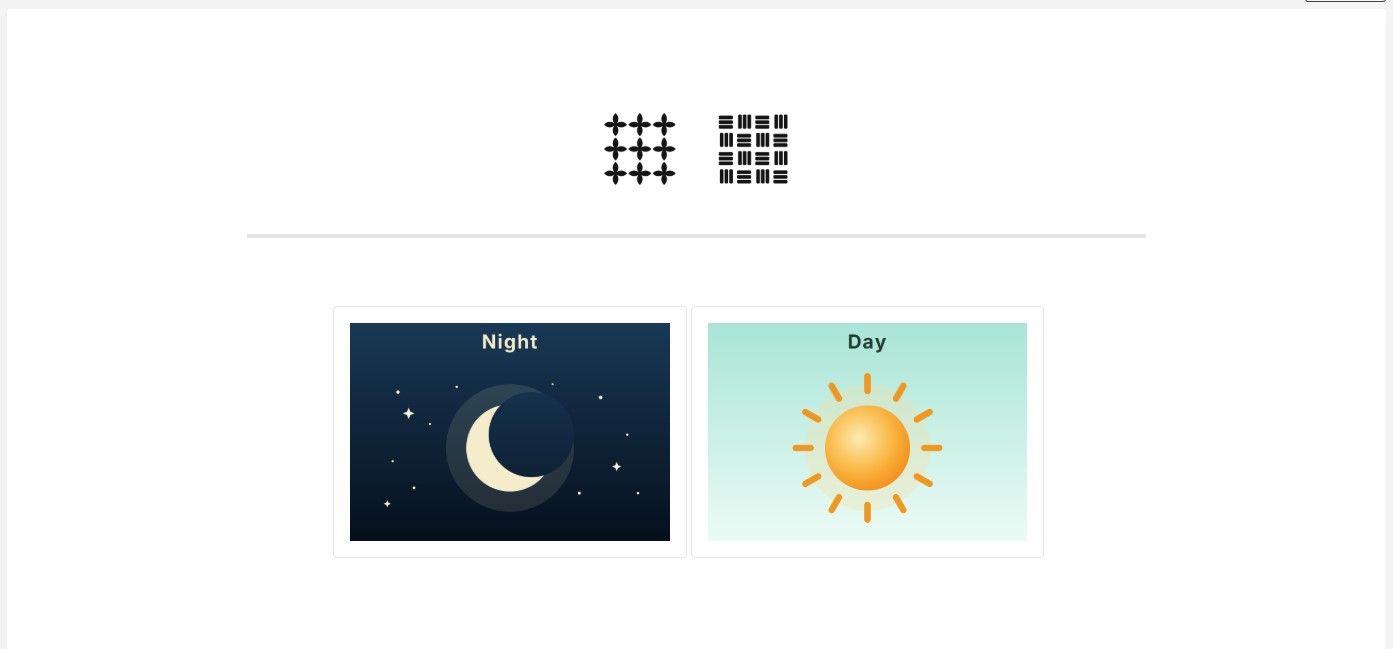
Preparation: Accept that the first rounds are guesses. After each reveal, lock in the correct category for that pair, and from the middle rounds on, answer quickly and consistently. Practicing the full 88 rounds trains you to learn the pairs fast and trust your answers.
The Balance Game
You are presented with a series of balancing scales containing different shapes. Each shape has a hidden weight, and your task is to work out which combination of shapes will balance the final, incomplete scale.
Every question contains several balanced scales that provide clues. By comparing them, eliminating equivalent shapes, and combining information, you must determine how many of each shape belong on the empty side.
The game is adaptive, with 10 questions to complete in 10 minutes. As you answer correctly, the questions become more challenging.
- What does the Balance Game measure?
Numerical and logical reasoning
Pattern recognition
Analytical problem solving
Ability to identify relationships between variables
Deductive reasoning
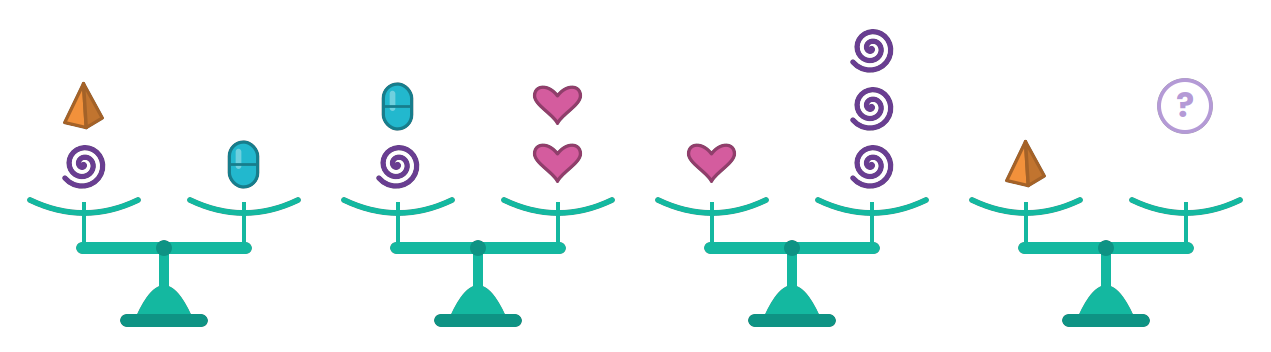
Preparation: Start from the scales that share the most shapes, cancel out identical shapes on both sides, and work out one shape’s weight at a time. Practicing under the 10-minute limit builds the speed you need as the questions get harder.
Ready to Practice All 13 Tasks?
You’ve seen how every task works. Now build the speed and confidence to perform at your best, with realistic simulations, step-by-step guides and instant performance feedback.
Arctic Shores Assessment Test App
To take the Arctic Shores assessment, you may be asked to install an app on your phone or Mac/PC.
Several apps administer the test, including Skyrise City and Arcadis Challenge. In addition, customized versions of the test are administered by individual companies, such as KPMG, Metro Bank, and PwC.
Take notice that you cannot use the app for training or fun, and you cannot use it without a username and password. The company you applied to will send you your login credentials, which will only be valid for a limited time.
Arctic Shores Assessment Profile Report
After completing the assessment, you will receive a profile report that encapsulates your unique psychological traits. The report is generated from thousands of data points measured during your assessment. The data points reflect your approach while taking each task. They are used to calculate your score across 34 personality and cognitive traits, such as resilience, creativity, learning agility, information processing, and emotional intelligence. The traits are organized into five sections – Personal Style, Cognition, Drive, Interpersonal Style, and Thinking Style. Your characteristics are presented on a scale that reflects your tendencies against data collected from a large comparison group.
Tips for Acing the Arctic Shores Assessment
- Read the instructions:
Even though it looks like a game, the tasks are not games but an assessment of your natural traits. Do not presume you know what to do, even if you are an experienced gamer. Read the instructions carefully before starting the task.
- Be prepared:
Practice the games beforehand, and understand every game, what stands behind it, and what traits it measures.
- Maximize your setting:
Set up a quiet and comfortable area where you will not be distracted and disturbed. Ensure your keyboard is working properly and your Internet connection is stable.
- Your Role Matters:
The eventual goal of the Arctic Shores game is to find out whether you are a good fit for a particular job. That will influence the way you behave in games. Remember that the level of emotional intelligence, risk-taking, drive, etc., expected from you will depend on your job, so there is no “one-size-fits-all” to pass the Arctic Shores test.
Walk Into Your Arctic Shores Assessment Prepared
Practice every task in advance, learn what each one measures and give yourself the best chance of standing out.
FAQs
There’s no single pass mark. Your results are compared with a large comparison group and with the profile the employer set for the role. You boost your chances by knowing what each task measures, reading every instruction, working in a quiet setting and practicing the tasks in advance, so you respond with focus instead of figuring out unfamiliar formats on the day.
The tasks look simple, which is exactly what catches candidates out. Several of them speed up, add distractions or hide the rules as you go, and the numerical and pattern tasks run on tight time limits. Candidates who have practiced the formats beforehand find the assessment far more manageable.
Some tasks have clear right and wrong answers, such as Order, Pattern, Analysis and Balance. Others, like the Balloon, Energy and Team Sales tasks, have no single correct answer and measure how you make decisions, take risks and learn. Our practice pack explains what each task looks for, so you can approach both types with confidence.
Arctic Shores reports your results as a profile across many traits, each shown against a comparison group. A “good” score depends on the role: a high appetite for risk may suit a sales job but not a compliance role. Focus on performing consistently and accurately rather than chasing one ideal profile.
Arctic Shores offers a short demo task that shows the general format, but it covers only one task. To practice all 13 tasks with realistic timing, performance summaries and step-by-step guides, use our Arctic Shores practice pack.
Arctic Shores has a library of tasks, and each employer chooses which ones its candidates take, so the number varies from one employer to another. Our practice pack covers all 13 tasks you may see, so you’re ready whichever set you receive.
Related Links
To learn more about gamified tests and their challenges go to our Game-Based Assessments page.


