SOPD-2 Practice Test - EEI System Operator & Power Dispatcher Prep
Updated: July, 2026
The SOPD II (System Operator/Power Dispatcher), also known as SOPD-2 or the second-order processing deficit test, is a pre-employment cognitive assessment by the Edison Electric Institute (EEI) used in utility hiring to evaluate candidates for energy control center positions at U.S. investor-owned electric utilities, such as system operators and power dispatchers.
* The EEI SOPD II, also referred to as SOPD-2, is developed and owned by the Edison Electric Institute (est. 1933), the trade association representing all U.S. investor-owned electric companies. The test is administered directly by member utility employers or at approved third-party testing centers. It is not available online.
1-Month Access
Note: this pack does not include multitasking practice tests

The SOPD II, developed by the Edison Electric Institute (EEI), is a pre-employment selection test for positions in energy control centers. It will examine your mathematical, verbal, and logical abilities under a strict time limit, adding extra pressure to this already challenging assessment.
System operators and power dispatchers work inside a utility's energy control center, monitoring voltage and electricity flow, issuing switching orders to reroute current around maintenance or damage, and responding to transformer or transmission line failures before they cascade into wider outages. The role runs on rotating shifts, since the grid needs constant coverage, and it typically comes with several years of structured on-the-job training even after a candidate is hired, given how much judgment the job demands under pressure.
That responsibility is reflected in pay. According to the U.S. Bureau of Labor Statistics, power plant operators, distributors, and dispatchers earned a median annual wage of $103,600 as of May 2024, though actual pay varies by utility, region, and whether the role covers generation, transmission, or distribution dispatch.
The SOPD II usually comes after an initial application and resume screen, once a utility has shortlisted candidates for a system operator or dispatcher opening. Passing the test is not the same as getting the job. Most utilities treat it as one gate in a longer process, often followed by a structured interview and, depending on the employer, additional rounds before a final offer.
How difficult the SOPD II feels comes down to the clock as much as the content. None of the four sections gives you much breathing room: Mathematical Usage allows roughly a minute per question, Analytical Thinking asks you to work through dense logical scenarios in under two minutes each, and the Multitasking Simulation requires tracking several tasks at once, which mirrors the divided attention the job itself demands. Candidates who walk in unprepared tend to lose time just adjusting to question formats they have never seen, which is why practice makes a measurable difference on this particular test.
Let's have a look at how the EEI SOPD II is built, and what practicing each section actually looks like inside the practice course-
This section assesses your ability to solve and operate mathematical relationships.
You will be presented with 16 multiple-choice questions which you will need to complete in 17 minutes of three types:
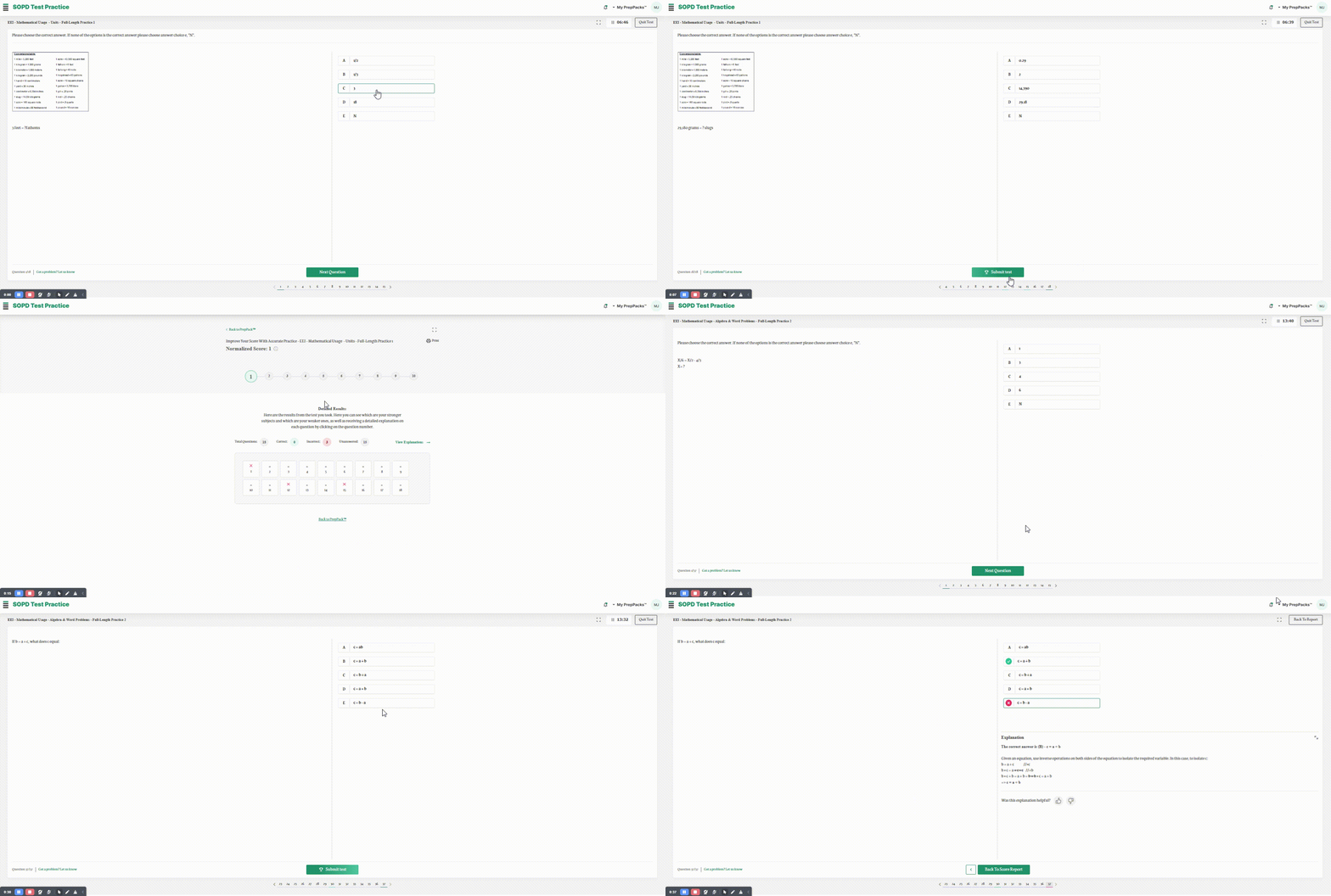
This test is broken down into three sections – argument, problem solving, and logical reasoning.
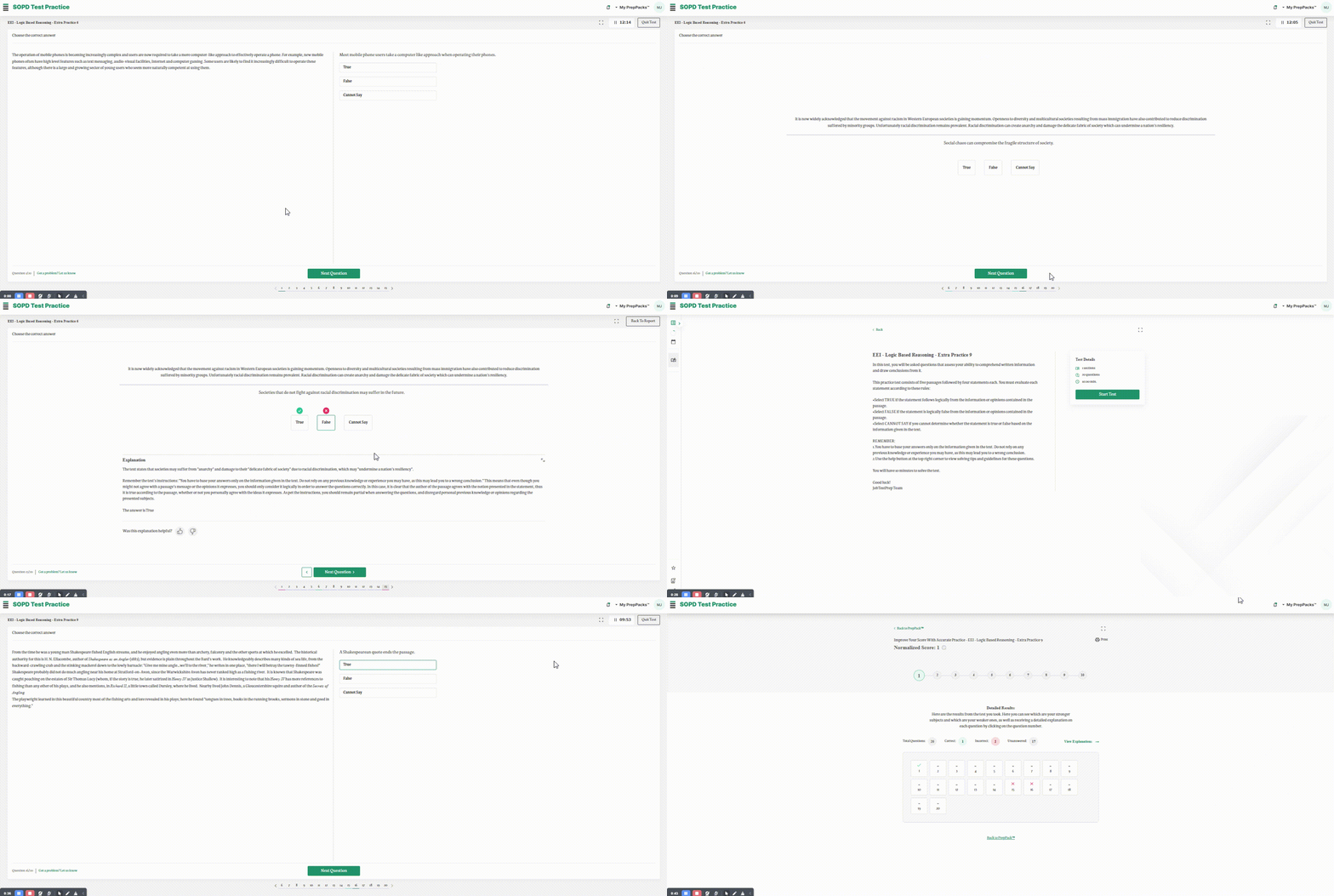
This test assesses your ability to read complex texts effectively and efficiently, while collecting the relevant information from within.
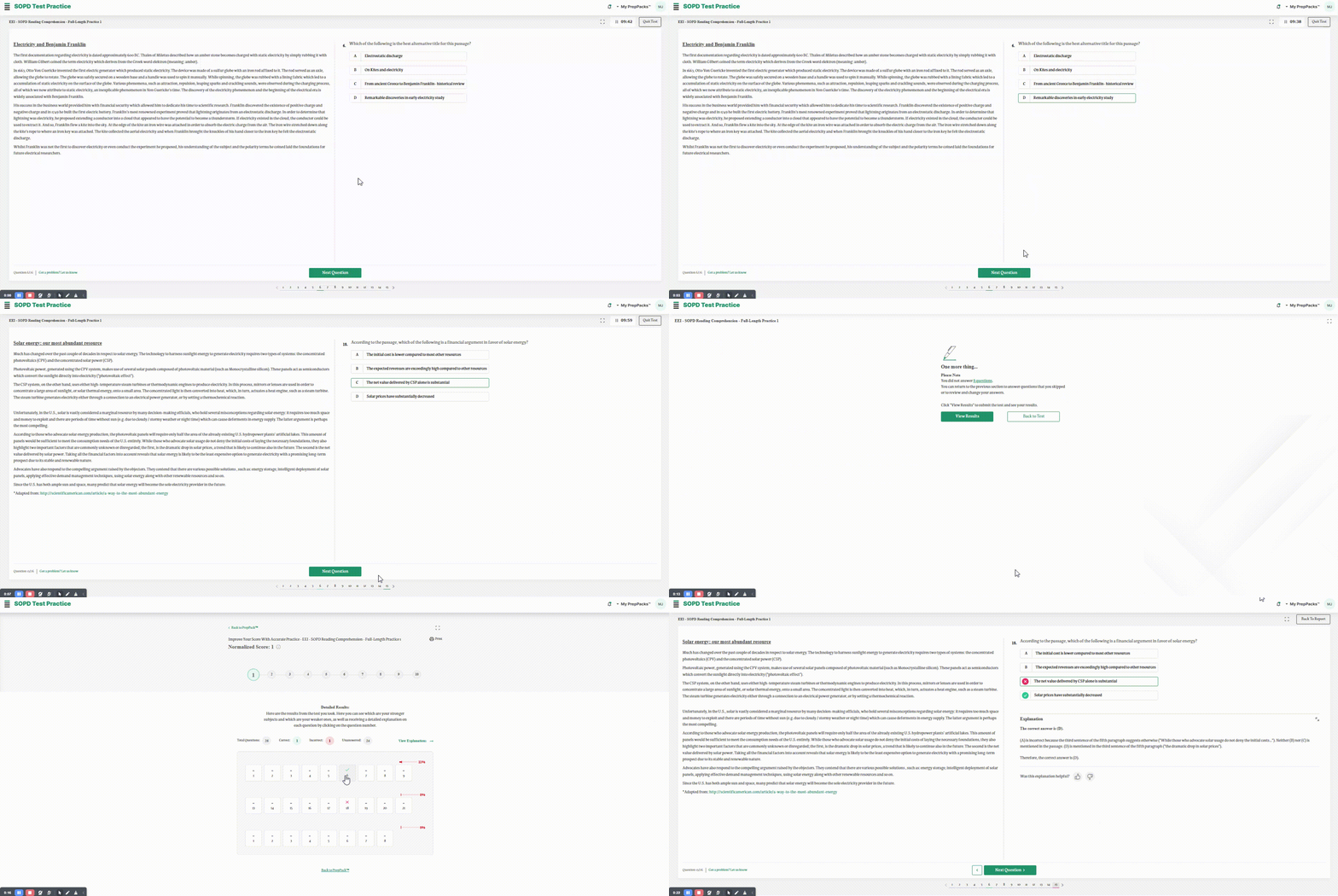
You will be given four passages (usually science-related) followed by several questions, which you will need to answer under a stressful time limit.
The test includes 16 multiple-choice questions and must be completed within 22 minutes.
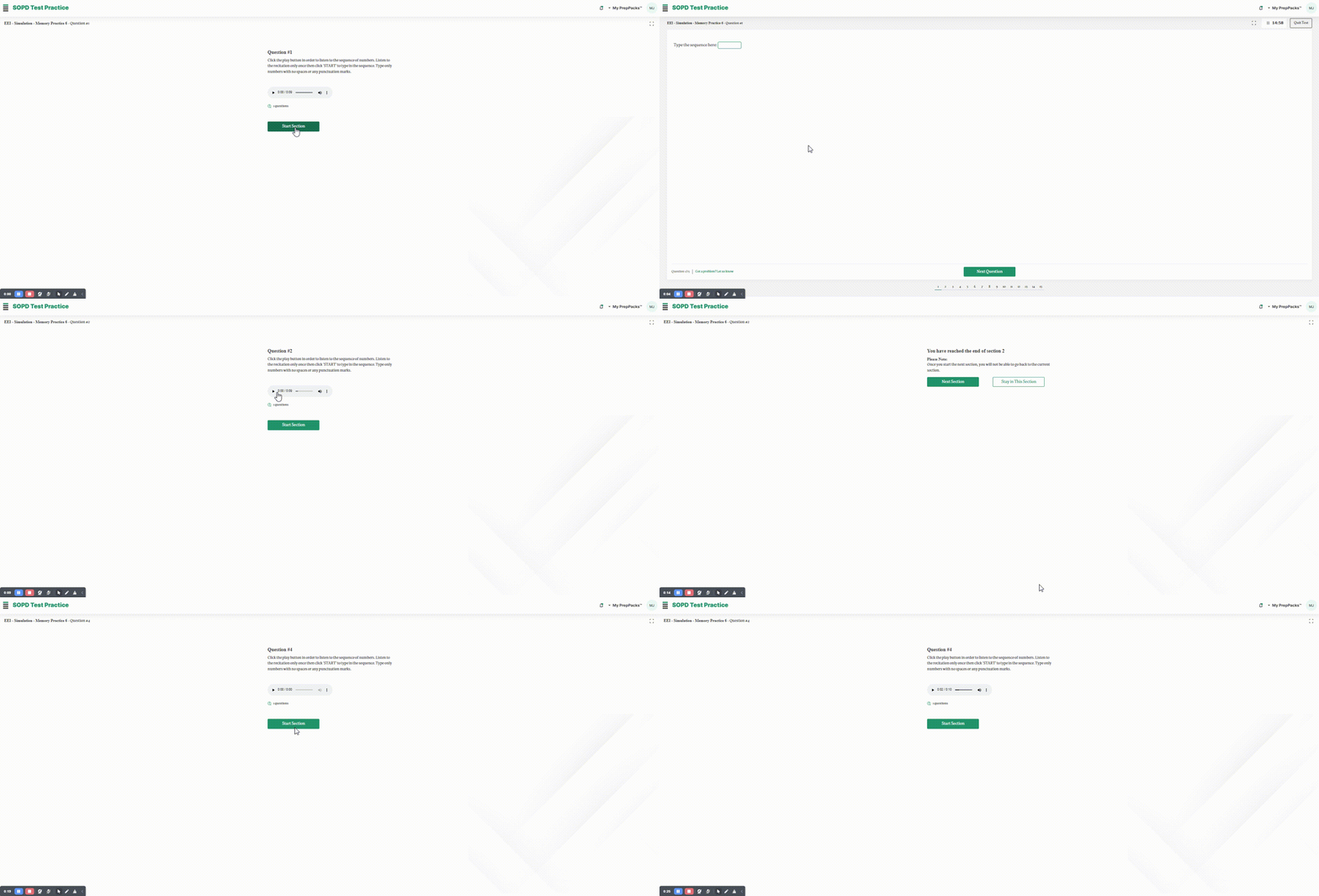
This test assesses a candidate's ability to monitor various tasks in parallel.
In this section, candidates must concurrently complete four separate tasks each presented in different areas of the screen:
The three sample questions below give you a real feel for the SOPD II, one from each timed section of the test. Work through them the same way you would on test day: read the instructions once, answer under time pressure, then use the full explanation to see not just whether you got it right, but the reasoning behind the correct answer. That reasoning, more than the single question itself, is what our full PrepPack builds on.
Below is a Mathematical Usage sample question, followed by the kind of in-depth answer and tips you'll get with the full prep pack. On the real SOPD Test, you'll have 17 minutes for 16 questions, so give yourself about one minute here before checking the explanation.
Please choose the correct answer. If none of the options is the correct answer please choose answer choice e, "N".
X - 8.3 = 15.9
X= ?
Below is an analytical thinking sample question (argument type), followed by the kind of in-depth answer and tips that you will receive when purchasing our prep pack. Since in the real SOPD Test you will need to answer 23 analytic thinking questions in 45 minutes, we propose you set a two-minute timer.
Scientists believe that many ordinary painkillers actually cause, not relieve, headaches because of medication overuse.
They estimate that half of all chronic migraines, and up to 25 percent of all headaches, are actually "rebound" episodes triggered by the overuse of common pain medications.
Studies of the relation between painkillers and headaches have always involved administering to test animals doses of painkillers massive enough to affect animals' nerve cells in the brain, and then measuring their levels of pain.
To date, results of studies on the most common causes of headaches have led to an overestimation of the degree to which medication overdose contributed to headaches.
Which one of the following, if true, most strengthens the above argument?
Below is a Reading Comprehension sample question, followed by the kind of in-depth answer and tips you'll get with the full prep pack. On the real SOPD Test, you'll have 22 minutes for 26 questions, so give yourself under a minute here before checking the explanation.
The purpose of this exam is to assess your ability to read and understand basic scientific reading materials. Please note that the question must be answered based on the provided information in the passage. Refrain from answering based on prior knowledge or any information not specifically provided in the passage. Select the best option from the provided choices.

Nuclear power provides 12% of the world's electricity and 20% of the electricity consumed in the US. There are over 100 nuclear reactors operating around the US. Some states generate the majority of their electricity from nuclear power.
Nuclear energy is environment friendly since it does not emit greenhouse gases. In addition, it is a stable and economical resource. The cost of electricity production by means of nuclear power became over the years lower than production by many other available resources, such as coal and natural gas.
Nuclear plants generate electricity by boiling water into steam; the steam then turn turbines which activate an electricity generator. Nuclear plants differ from other fossil-fueled power plants in what serves as a heat source to turn water into steam. Nuclear plants do not burn fuel; instead, they use a process called "fission". During the fission process, an atom (in this case, uranium) splits into smaller parts releasing neutrons from its nucleus. These neutrons hit other atoms and cause them to split as well; thus, creating a self-sustaining chain reaction which releases an enormous amount of heat.
Currently, there are two types of nuclear reactors in the US: pressurized water reactor (PWR) and boiling water reactor (BWR).
The PWR maintains water under pressure so that it heats, but prevent if from boiling. The heated water is pumped through a steam generator, where it transfers its thermal energy to a secondary system where steam is generated and flows to turbines which, in turn, spin an electric generator that produces electricity. The water from the reactor and the water that is turned into steam are in separate systems and do not mix.
In the BWR, the water flows upward through the core, where it is heated by fission and allowed to boil in the reactor vessel. The water then turns into steam which is carried by pipes to spin the turbine, which drives the generator to produce electricity.
In PWRs and BWRs. the steam is turned back into water for reuse. In addition, the water serves both as a coolant and as a moderator, to slow neutrons.
Despite the elegancy and evident efficiency of the nuclear method, many wonder why we need it when we can harness renewable energy sources like the wind and the sun. The answer, others may argue, is that nuclear power is able to reliably supply a sustainable amount of electricity in every hour of every day of the year; hence, it is an important resource for meeting with the ever-increasing demand for electricity.
What is true about the water used in the PWR?


We've created a comprehensive EEI SOPD II test prep course designed to help you succeed. Our course closely mimics the actual test conditions and platform, allowing you to identify and improve your weaker areas. With this focused preparation, you'll be confident and ready to excel on test day.
Why preparation matters: Most utilities enforce a 30-day minimum waiting period between retake attempts and limit candidates to 2 attempts per 12-month period. There is no second chance to make a first impression - thorough preparation before your first attempt is not optional, it is essential.
JobTestPrep's EEI SOPD test prep has recently been upgraded based on expert research and user feedback in order to ensure that you receive the highest quality practice available. You can rely on our experience and expertise to provide you with the tools you need to get the high score you need.

At JobTestPrep, we've helped thousands of candidates pass competitive hiring assessments since 1992. Our materials are designed by psychometric experts and updated based on real candidate feedback to reflect the latest test formats.

The SOPD II is widely considered one of the most demanding EEI assessments. Scores are reported on a 1-10 index scale, and passing thresholds vary by employer and role - most utilities set the bar high for energy control center positions given the safety-critical nature of the work. The Analytical Thinking section in particular - 23 questions across three question types in 45 minutes - is where many candidates struggle. Targeted practice before your first attempt is essential.
Yes. Official Edison Electric Institute (EEI) administration procedures for the SOPD II typically permit the use of a basic on-screen calculator or a physical basic calculator provided by the testing center for the Mathematical Usage section.
Most utilities that use the SOPD II enforce a limit of two attempts per 12-month period, with a mandatory waiting period between attempts - Entergy, for example, requires 30 days between retakes. Because retake opportunities are limited, thorough preparation before your first attempt is strongly recommended.
The SOPD II is used by investor-owned electric utilities that operate energy control centers and hire system operators and power dispatchers. Confirmed users include Entergy Corporation, Southern Company, Georgia Power, and other regional utilities across the United States. If you have received a SOPD II testing invitation, your employer's HR or recruitment team can confirm the specific passing threshold required for your role.
SOPD stands for System Operator/Power Dispatcher, or more formally, System Operator/Power Dispatching. The full test name is the System Operator/Power Dispatching II Selection System (SO/PD II), also referred to as SOPD-2. It's developed by the Edison Electric Institute (EEI) and used by investor-owned electric utilities to evaluate candidates for energy control center roles.
The Multitasking Simulation is the most unusual part of the SOPD II. Instead of answering standalone questions, candidates must concurrently complete four separate tasks, each presented in a different area of the screen: memorization, basic math, visual monitoring, and listening. It's designed to mirror the divided attention required in an actual energy control center, where an operator has to track multiple systems and signals at once. Our current PrepPack includes basic addition and memory drills to help build the underlying skills this section demands, though it does not include a full-length simulation replicating all four tasks at once.
After completing your payment, you will receive two emails: a payment receipt and a login link with your account details. Once you log in and reset your password, you will have instant, unlimited access to your PrepPack.
You can start practicing immediately with tailored questions and detailed explanations, tracking your performance along the way. Your progress is saved, allowing you to revisit previous attempts as many times as you like. If you need more time, you can extend your subscription by contacting c.serv@jobtestprep.com.