Millwright Apprenticeship Aptitude Test - Practice & Exam Prep [2026]
Updated: March, 2026
The Millwright Apprenticeship Aptitude Test is a pre-employment cognitive assessment required for candidates applying to millwright (industrial mechanic) apprenticeship programs across the United States and Canada. Millwrights are members of the United Brotherhood of Carpenters and Joiners of America (UBC), and the test is administered independently by individual JATC locals - format and section weighting vary by location. It is not a test of trade knowledge.
The test covers up to 5 sections: Mathematics, Reading Comprehension, Mechanical Aptitude, Spatial Reasoning and Tool Recognition. Not all locals include every section. The passing score is 70% at most locals but may vary. As with most trades aptitude tests, locals typically rank all applicants by score and fill available slots from the top down - passing is the floor, not the goal.
1-Month Access

Below you'll find Millwright Aptitude Test questions and answers. Each question is accompanied by a detailed answer and explanation.
12.8 - 4.19 = ?
x + y = 3.
5x2 + 10xy + 5y2 - 2(x+y) = ?
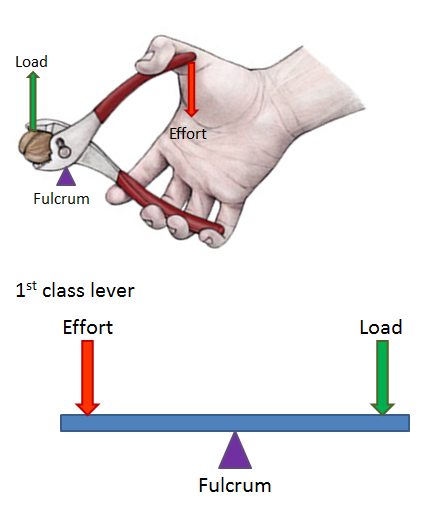
The following tool is an example of a:
The tool presented in this image is a set of pliers, which are used for gripping. In this device the hinge is in the middle of the arms, an object intended for gripping is placed between the jaws, and a force is applied onto the handles. Pliers are an example of a first class lever: the hinge, located in the middle, is the fulcrum and the input force and output force are on both ends of the lever.
The correct answer is A.
Shadows are ______ at sunrise, get ______ until noon, and then get ______ until sunset.
In which way is the wagon accelerating? (If neither, mark C.)
The pendulum is moving backward; therefore, the car is accelerating in the opposite direction.
What happens when an object is in an accelerating system, in the same way, you feel pulled back when the car is speeding up or forwards when it is braking.
Remember the physical principle: When an object is within an accelerating system (another object that accelerates or decelerates), the inner object's force will be in the direction opposite to the acceleration.

When a person works in a hot environment, the body must get rid of excess heat to maintain a stable internal temperature. It does this mainly through circulating blood to the skin and through sweating. When the air temperature is warm, cooling of the body becomes more difficult. When this happens, the body continues to store heat, and the person begins to lose concentration and has difficulty focusing on a task. Excessive exposure to heat requires immediate medical attention.
Which one of the following would best replace ’excess’ while maintaining the meaning of the passage?


At JobTestPrep, we've helped thousands of candidates pass competitive hiring assessments since 1992. Our materials are designed by psychometric experts and updated based on real candidate feedback to reflect the latest test formats.

The millwright aptitude test is a timed cognitive aptitude assessment - not a trade knowledge exam. The difficulty comes from time pressure, not technical complexity. Most candidates find the Mathematics and Spatial Reasoning sections the most challenging, particularly because no calculator is permitted and spatial questions require you to mentally manipulate shapes and 3D structures under a strict time limit. The Mechanical Aptitude section tests physics principles - gears, pulleys, levers, pressure - which are unfamiliar to candidates without a mechanical background. Because most UBC locals rank all applicants by score and fill available apprenticeship slots from the top down, passing the 70% threshold is only the starting point - a competitive score is what secures a spot.
The passing score is 70% at most US locals In Alberta, the AIT Trade Entrance Exam also requires a minimum of 70% to pass. However, passing alone rarely guarantees entry. Most locals rank all applicants by score and allocate available apprenticeship positions from the highest scores down. A candidate who scores exactly 70% in a competitive intake cycle may still not receive an offer. Preparing to score as high as possible - not just to pass - is the correct approach.
It depends on where you are testing. For US JATC locals, no calculator is permitted - the Mathematics section tests your ability to work quickly and accurately under time pressure without aids, covering arithmetic (fractions, decimals, percentages), algebraic calculations, conversion-table and formula applications, and basic geometry. For the Alberta AIT Cluster 4 exam, a calculator (Casio FX-260 or Sharp EL-520X) is supplied to all candidates at the test site. In both cases, the math section tests the same core skills - the difference is whether you are racing the clock with or without a calculator. Candidates preparing for US locals should practice under strict no-calculator conditions. Alberta candidates should still practice the math content thoroughly - a supplied calculator does not compensate for weak foundational math skills under time pressure.
A static PDF gives you a fixed set of questions with answer keys. Once you have seen those questions, you have not prepared - you have memorized. The millwright aptitude test is timed, and time management under pressure is a skill that only develops through repeated timed practice, not through reading answers on a page. A PDF cannot simulate the experience of working through a spatial reasoning question in 60 seconds, or recalculating an algebra problem without a calculator when your first approach fails. JobTestPrep's PrepPack provides full-length timed simulations calibrated to be harder than the real test, section-specific drills, and step-by-step explanations that teach the reasoning behind each answer - building genuine problem-solving ability across every section, not pattern recognition from a recycled question set.
The millwright Level 1 test is not the same as the pre-apprenticeship aptitude test. Once you have been accepted into a millwright apprenticeship program in Canada, your training is structured into four levels - each completed over approximately one year through a combination of on-the-job training and in-school blocks. In BC, for example, each in-school level is a seven-week block, completed once per year over the four-year program. The Level 1 written exam tests trade theory covered during that first year of in-school training - mechanical principles, shop equipment, fasteners, lubrication, and foundational millwright knowledge. It is a trade knowledge exam administered within the apprenticeship program, not a cognitive screening. JobTestPrep's millwright PrepPack covers the pre-apprenticeship aptitude test only - it is not designed for Level 1 or any in-school level exams.
A millwright apprenticeship in Alberta is a provincially registered training program for the Industrial Mechanic (Millwright) trade, administered under the Skilled Trades and Apprenticeship Education Act (STAE Act) by Alberta Apprenticeship and Industry Training. The program runs for a minimum of 72 months (9,360 hours), combining on-the-job training with in-school technical instruction completed in four yearly levels. To qualify for entry, candidates must either hold the required Alberta high school courses (English 20-2, Math 20-3, Science 10) or pass the AIT Trade Entrance Exam - Cluster 4 with a score of 70% or higher. Upon completing the apprenticeship and passing the interprovincial exam, graduates receive the Red Seal endorsement as an Industrial Mechanic (Millwright), allowing them to practice the trade in any Canadian province that recognizes the Red Seal program.
After completing your payment, you will receive two emails: a payment receipt and a login link with your account details. Once you log in and reset your password, you will have instant, unlimited access to your PrepPack.