 Free Master Plumber Test Guide and Practice 2026


The master plumber test is a written licensing exam required to plan, supervise, and independently run plumbing work at the highest level of certification in the United States. It tests applied knowledge across all major plumbing domains - law and board rules, definitions, fixtures, water heaters, water supply, drainage, venting, traps, fuel gas, OSHA safety, accessibility requirements, and plumbing math and sizing. Exam format, question count, and passing score requirements vary by state, so always confirm the specific details with your licensing board before test day.
On this page you will find real master plumber practice test questions drawn directly from our PrepPack - covering the key sections of the exam so you can assess your current level and identify where you need more work. If the questions reveal a need for extra practice, our full Master Plumber PrepPack is ready to take you the rest of the way.


What is the Master Plumber Exam?
The master plumber exam is the highest-level licensing exam in the plumbing trade, required to operate independently as a licensed master plumber in the United States. Unlike the journeyman plumber test which qualifies you to work in the field without supervision, the master plumber test goes further - it tests your ability to design plumbing systems, manage projects, supervise journeyman plumbers and apprentices, pull permits, and take full legal responsibility for plumbing installations.
The exam is administered at the state level, most commonly through PSI Exams, and references the International Plumbing Code (IPC) or the Uniform Plumbing Code (UPC) depending on your state. It is typically an open-book exam, and covers topics including drainage systems, vent systems, water distribution, fixtures, backflow prevention, pipe sizing, and plumbing system design. Candidates who pass the master plumber exam are awarded their master plumber license, qualifying them to own and operate a plumbing business, pull permits, and oversee all levels of plumbing work.
Free Master Plumber Test Practice Questions

Section 1 - Plumbing Math and Sizing
Math and sizing questions test your ability to apply plumbing calculations to real-world scenarios, not just solve equations in isolation. On the master plumber exam, this covers water supply and drainage sizing, water heater recovery and first-hour rating, and gas demand and pipe sizing. These questions connect a written scenario to a specific formula, so reading the question carefully and tracking your units matters as much as knowing the calculation itself.
Section 2 - Code Knowledge
Code knowledge questions test your ability to recall and apply plumbing code requirements accurately, not just recognize them. On the master plumber exam, this covers general plumbing code provisions along with license law and board rules - the administrative and legal side of practicing as a master plumber. These questions reward precision, since licensing boards test the specific wording of a rule, not just the general idea behind it.
Section 3 - Trade and Safety Knowledge
Trade and safety questions test your understanding of jobsite safety requirements and accessibility standards that apply to plumbing work. On the master plumber exam, this covers OSHA construction industry safety standards relevant to plumbing jobsites and accessibility requirements for fixtures and installations. These questions combine regulatory recall with practical judgment about what a compliant, safe installation actually looks like in the field.
Ready for the Real Exam?
The sample questions above give you a feel for the format and topics covered on the master plumber exam. But there is a significant difference between answering a few untimed questions at home and sitting at a test center with the clock running - and depending on your state, that could mean anywhere from around 100 to 210 questions. That pressure changes everything.
The best way to prepare is by practicing under real exam conditions before exam day. JobTestPrep's Master Plumber PrepPack includes a 30-question diagnostic, 14 topic-based practice tests covering every section of the exam, and a full 210-question timed simulation - so there are no surprises on test day.
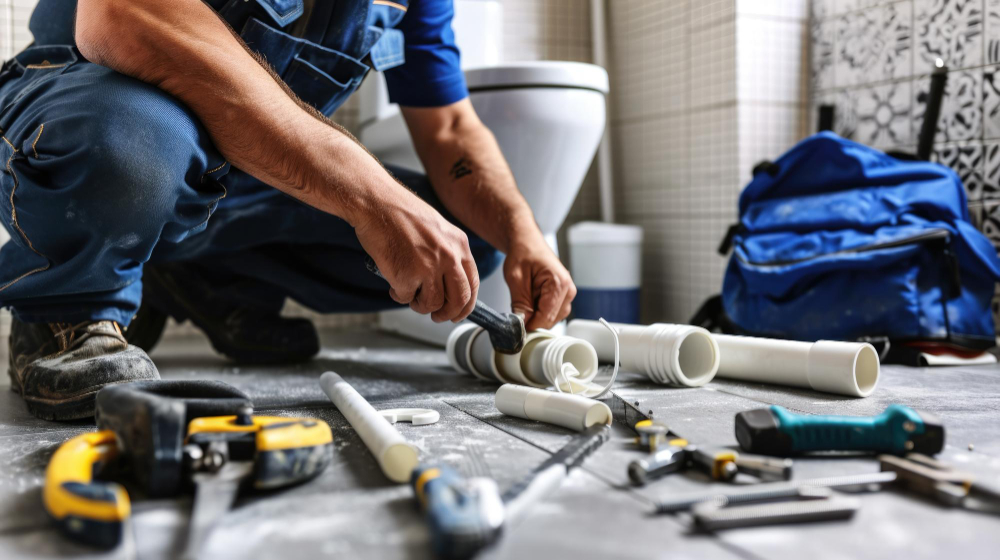
What Is the Importance of the Master Plumber Exam for Your Career?
Passing the master plumber test is the single most career-defining decision you can make as a licensed plumber - and the financial case is immediate. Journeyman plumbers earn an average of $69,273 per year. Master plumbers command significantly more - earning a master plumber license increases earning potential by an average of $15,000 to $25,000 annually compared to journeyman wages, with top earners in high-demand markets exceeding $100,000 per year depending on experience, specialization, and location.
But the master plumber license is about far more than a pay raise. It is the credential that unlocks the full scope of the trade. As a licensed master plumber, you can design plumbing systems from scratch, pull permits independently, supervise journeyman plumbers and apprentices, and take full legal responsibility for installations on residential and commercial projects. You can legally establish your own plumbing contracting company, bid on commercial projects, and build a client base without partnering with another licensed plumber. None of this is available at the journeyman level.
According to the U.S. Bureau of Labor Statistics Occupational Outlook Handbook, employment of plumbers is projected to grow 6% from 2023 to 2033 - faster than the average for all occupations. The demand for master-licensed professionals who can run jobs, manage teams, and own businesses is growing alongside it. Preparing thoroughly for your master plumber exam is not just about passing a test. It is about positioning yourself at the top of a trade that rewards skill, licensing, and leadership at every level.
How Hard Is the Master Plumber Exam?
The master plumber test is harder than the journeyman exam - and deliberately so. It tests not just knowledge of plumbing code but the ability to apply it at a design and management level. Pass rates vary by state, and the exam typically contains 90 to 120 questions with a time allowance of 3 to 4 hours. The passing score is generally 70% to 75% depending on the state. Candidates who underestimate the step up from journeyman level are among the most common first-attempt failures.
The master plumber exam covers the same core domains as the journeyman exam - plumbing code general knowledge, drainage, waste, and vent (DWV) systems, water supply and distribution, gas piping, and fixtures and equipment - but at a higher level of complexity. Where the journeyman exam asks you to recall or apply a code provision, the master plumber test expects you to design systems, size them correctly, supervise their installation, and identify errors in proposed layouts. Candidates encounter three distinct question types: code knowledge questions testing direct recall of specific IPC or UPC provisions, applied math questions requiring calculations for slope, pipe sizing, fixture units, and flow rates, and system design questions testing your ability to interpret blueprints, plan installations, and apply structural considerations such as notching and boring requirements. Real test-takers consistently flag sizing charts, drainage and venting drawings, and minimum code requirements as the most demanding areas on the exam.
Most states administer the master plumber exam as an open-book test. Printed notes are allowed in some states as long as they are three-hole punched and placed in a binder - loose papers, sticky notes, and removable tabs are not permitted. As with the journeyman exam, open book does not mean easy - the time limit means you need to know your code book well enough to navigate it quickly, not read it for the first time under pressure.
On test day the exam is administered at a licensed testing center, most commonly through PSI Exams or Pearson VUE depending on your state. No electronic devices are permitted. To prepare effectively, work through timed master plumber practice test questions that mirror real exam conditions, focus heavily on system design and sizing calculations, and drill the applied math until fixture unit counts, pipe sizing, and slope calculations are second nature. Candidates who prepare with realistic master plumber practice exam questions - rather than relying solely on field experience - consistently outperform those who do not.
Plumber Master Test FAQs
Master plumber exam subjects cover every major domain of plumbing knowledge at a design and management level. Most state exams based on the IPC or UPC include: plumbing code general knowledge, drainage, waste, and vent (DWV) systems, water supply and distribution, gas piping systems, fixtures and equipment, pipe sizing and applied math, blueprint reading and isometric drawings, and - in states that include a business and law section - topics such as estimating, bidding, OSHA safety, and contractor law. Real test-takers consistently flag sizing charts, drainage and venting system drawings, and minimum code requirements as the most demanding areas on the exam. Master plumber exam coverage goes deeper than the journeyman exam - expect system design questions that require you to apply multiple code provisions simultaneously, not just recall a single provision. Always download the official exam content outline from your state licensing board or testing provider to confirm the exact master plumbing exam coverage for your jurisdiction.
In most states, yes - the master plumber exam is open book. Printed notes are allowed in some states as long as they are three-hole punched and placed in a binder. Loose papers, removable tabs, and sticky notes are not permitted. Most states allow bound copies of the IPC or UPC but restrict which edition you may bring - bringing the wrong edition can result in disqualification. Open book does not mean easy. The master plumber test is timed, and flipping through a code book to find every answer is not a viable strategy. Candidates who pass are those who already understand the material and use the code book to confirm specific values quickly. Always verify exactly which reference materials are permitted with your state licensing board before exam day.
Master plumber exam time duration varies by state, but most candidates should plan for a substantial commitment on test day. The exam typically lasts 3 to 4 hours and contains around 90 to 120 questions. Some states split the exam into two parts - a technical section and a business and law section - which may be administered on the same day or across two separate sessions. In Delaware, for example, the technical exam has 100 questions with a 4-hour time limit, while the business and law section has 50 questions with a 2-hour limit. Always check the current candidate bulletin issued by your state licensing board or testing provider for the exact master plumber exam number of items and time allocation before you sit.
The master plumber exam passing score varies by state but is generally 70% to 75%. Some states apply weighted scoring across subjects and may require a minimum score in each individual domain - meaning you cannot compensate for a very weak subject by excelling elsewhere. In Nevada, for example, candidates must score a minimum of 75% on the exam. Scores are typically available immediately when the exam is taken on a computer at a testing center. If you do not pass, your score report will identify which domains you underperformed in - use that data to focus your master plumber test prep before scheduling a retake. Always verify the current master plumber exam passing score requirement with your state licensing board, as these can change when new code cycles are adopted.
Yes - most states allow candidates to retake the master plumber test after a failed attempt. Retake policies vary by state: some impose a mandatory waiting period, others require a new application and fee, and some limit the number of attempts within a given timeframe. In New York City, for example, candidates must submit a new practical examination application within two months of receiving notification of passing the written examination - missing that window resets the process. Use a failed attempt as a diagnostic tool: review your scored results by topic and focus your master plumber exam prep on the domains where you lost the most points. Always confirm retake rules with your state licensing board before reapplying.
A free master plumber practice test PDF is a static document - it cannot replicate the pressure of sitting a timed, scored exam. The master plumber exam runs for approximately 3 to 4 hours and requires you to manage your time across 90 to 120 questions while navigating a code book. A PDF cannot train you to do that. A timed master plumber practice exam simulation builds the pacing, decision-making, and code navigation habits that determine whether you pass or fail under real exam conditions. It also generates scored results by topic, so you can identify exactly which master plumber exam subjects need more work before test day. Candidates who prepare with realistic timed simulations consistently outperform those who rely on static PDFs or field experience alone. JobTestPrep's Master Plumber PrepPack - currently in development - will include fully timed, scored simulations. Bookmark this page to be notified when it launches.
The master plumber license unlocks a scope of work that is legally off-limits at the journeyman level. Master plumbers can legally establish their own plumbing contracting company, bid on commercial projects, and build a client base without partnering with another licensed plumber. They can design plumbing systems from scratch, create and stamp plumbing schematics, pull permits independently, and take full legal responsibility for all plumbing work on a project. Master plumbers serve in leadership roles, supervising journeyman plumbers and apprentices, and work directly with officials from code and permit offices. In most states, a master plumber license is also required to act as the responsible party on commercial construction projects and to legally employ other plumbers under a plumbing contractor business. A journeyman cannot do any of these things independently - they remain field workers under the umbrella of a master-licensed operation
Becoming a master plumber typically takes between 7 to 10 years in total. The process includes completing a 4 to 5 year apprenticeship, passing the journeyman plumber exam, and then accumulating additional years of experience as a licensed journeyman before qualifying to sit for the master plumber exam. Master plumbers typically have 2 to 5 years of training and experience beyond the journeyman level. The timeline varies by state - some require as little as 2 additional years of journeyman experience while others require up to 5 or more. The path is long but the payoff is significant: the master plumber license is the highest credential in the trade and the gateway to owning your own plumbing business.
Master plumber exam requirements vary by state but follow a consistent framework. Most jurisdictions require between 4,000 and 12,000 hours of plumbing experience as a licensed journeyman before you qualify to sit for the master examination - typically two to six years of journeyman-level work. Nearly every state requires you to hold an active journeyman license before qualifying for master status - you cannot jump directly from apprentice to master even if you accumulate enough hours. Additional requirements typically include a completed application, documented work experience verified by past employers, a background check, proof of citizenship or eligible immigration status, and payment of exam fees. The total process from starting an apprenticeship to earning a master plumber license typically spans 7 to 10 years, depending on individual progress and state-specific requirements. Always verify the exact master plumber exam requirements with your state licensing board.
Taking a Different Plumbing Exam? Find the Right Prep
Customer reviews
4.8
★
★
★
★
★
Based on 12 reviews
Yes
I would highly recommend this for others
It helped out it threw a bunch of questions at me that made me ready for my actual test, but there is a lot more information on this than the actual plumbing aptitude test but overall it’s great
generally it is good
Plumbers practice test is comprehensive and exhaustive


